Playgama unveils a comprehensive suite of AI tools, enhancing game development by enabling agents to analyze, refine, and update games autonomously.
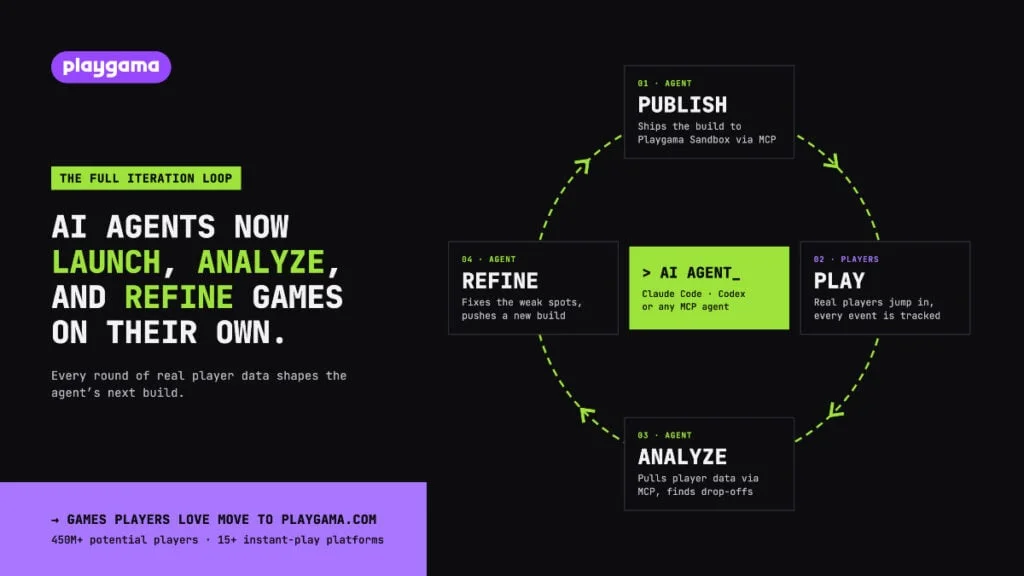
Playgama has introduced a powerful suite of tools designed to streamline the entire iteration process of games developed using AI agents. Developers can now directly instruct their agents to publish a game, which immediately appears in the Playgama Sandbox. This setup allows for real-time player feedback, which the AI quickly analyzes to enhance the game before re-releasing improved versions. This iterative cycle empowers players to consistently interact with evolving game builds. The implications of such a system are profound; developers can cultivate a more engaged community while delivering more polished products faster than ever before.
AI Models Fueling Game Creation
September saw a flurry of significant AI model releases, notably OpenAI’s GPT-6 Astra and Anthropic’s Claude Opus 5.5. These advancements have catalyzed a wave of AI-generated games, particularly utilizing browser-based formats. HTML5 serves as a favored venue for this type of development due to its lightweight and fully code-driven nature, avoiding complications tied to visual editors and binary formats that can challenge AI agents in traditional game engines. What this means for developers is that they can focus less on the technicalities of the platform and more on creative storytelling and gameplay mechanics. The technological advancements in AI allow for a much broader spectrum of game ideas to be explored, pushing the boundaries of what developers can conceive.
A New Ecosystem for Diverse Gaming
Playgama's new ecosystem for AI-generated games comprises three key components:
- Playgama MCP facilitates the direct shipment of games created with agents like Codex and Claude Code to the sandbox. This streamlined publishing process is essential for rapid development cycles.
- Playgama Sandbox serves as a launchpad and discovery platform for these AI-crafted games, connecting them with natural audiences eager for fresh content.
- Playgama Bridge SDK simplifies the distribution of HTML5 games across multiple web gaming platforms, now enhanced with event-level analytics to provide agents with insights into player engagement. Developers can gain immediate feedback on how gamers are interacting with their titles.
Streamlined Publishing and Analytics
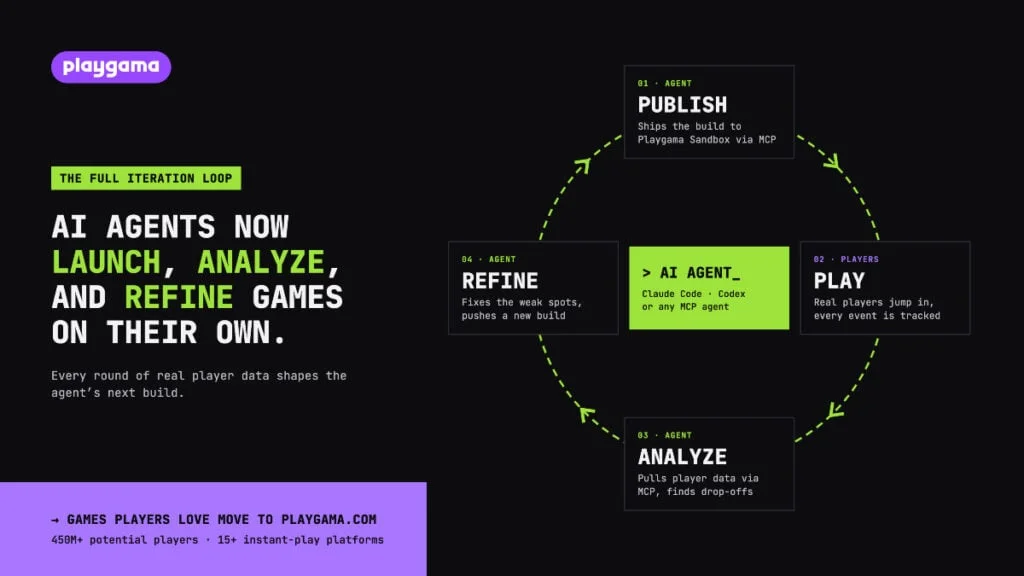
Upon completion, developers merely ask their AI to publish directly on Playgama via Claude Code or Codex, with the agent swiftly uploading and generating a shareable link. This automation eliminates manual processes, allowing agents to make improvements by pushing updates autonomously. Initial game builds are immediately accessible in the Sandbox, where they are presented to players within the extensive Playgama network. Games that capture ongoing player interest are highlighted to broader audiences, enhancing their visibility. Players become part of the development process, influencing how games evolve with their feedback, a concept that traditional game development rarely accommodated.
Moreover, developers gain access to essential analytics from day one, alongside potential ad revenue and future paid growth avenues through user acquisition. The platform meticulously tracks playtime, game performance, and retention metrics. Developers can also define custom events to glean insights during crucial gameplay moments—allowing AI to identify drop-off points, modify the game, and quickly upload fresh builds for further analysis and enhancement. This level of detail not only informs developers about the initial reception of their game but also builds a rich data tapestry that can guide future projects.
Expanding Reach and Audience
Successful titles that engage players in the Sandbox can transition to playgama.com, accessing a vast external distribution network potentially reaching over 450 million players across more than 15 instant-play platforms, including YouTube Playables. This gives developers an unprecedented chance to market and scale their creations without the typical constraints of traditional gaming distribution.
“As each new model is introduced, creating the initial version of a game accelerates. The real opportunity lies in enabling agents to make informed decisions about subsequent iterations, which requires real-world player data,” said Dmitry Kachmar, Founder of Playgama, emphasizing the platform's design to foster ongoing development. There's a palpable shift happening here, where the speed of development meets live player interactions, a scenario rarely seen before.
HTML5 as the Preferred Platform
The HTML5 format has emerged as a natural preference for AI-driven games, as indicated by leading AI labs' tendencies to initiate projects designed for browser play. This trend is further reinforced by events like Cursor’s Vibe Jam, which mandates all entries be browser-compatible, showcasing this format's viability. As models progress, HTML5 stands poised as the fertile ground where AI-generated games will evolve from concepts into viable market products. The flexibility of HTML5 allows developers to iterate quickly, enhancing the player experience without the burden of complicated software requirements.
Playgama's mission to amplify the potential of agent-driven game development is clear: by connecting engaging titles with expansive audiences, they help shape the future of interactive entertainment. What this signifies is more than just technological progression; it represents a shift in how games are conceived, developed, and ultimately consumed, opening new avenues for both creators and players alike.
Future Implications for Game Development
Looking ahead, the implications of Playgama's advancements are multifaceted. The combination of AI-driven development and real-time analytics could rewrite the rules of game design. If you're working in this space, you might find yourself on the brink of a revolution in development cycles. Traditional methods that rely heavily on long-term beta tests and extensive market research could become less relevant. Developers might favor a "test and iterate" model propelled by player feedback, leading to faster adaptations and innovations.
The demand for games that offer more immediate satisfaction and are continually refreshed will only grow. As players become accustomed to this level of engagement, those who stick with traditional models may find themselves on the outside looking in. This evolving paradigm is not just a temporary trend; it's a fundamental shift in how games are created, disseminated, and enjoyed.
Discussion
Sign in to join the discussion.