Leyou’s rise reflects Asia’s growing role in gaming, from free-to-play and live-service models to new debates about AI and technological change.

Leyou Technologies’ journey from Hong Kong chicken producer to owner of major game studios looked like an industry oddity in 2017. In hindsight, it pointed to a broader shift: companies and countries once seen as outsiders were moving up the value chain in technology and entertainment. That change is now hard to dismiss.
Alex Xu, Leyou’s former CEO, invited me onto the English edition of his AlphaBuild podcast. We first met at Devcom in Cologne in 2017, after I wrote about Leyou’s move into gaming and its acquisition of Digital Extremes, the studio behind Warframe. By 2020, Leyou also owned Splash Damage and Athlon Games and held stakes in Certain Affinity and several Chinese studios. Xu sold the company to Tencent that year for $1.4 billion.
That outcome seemed improbable when we met. Now the more interesting question is what it says about the industry: emerging regions can become major sources of game development, and ideas that once met resistance in the West can reshape how games are made and sold. Xu and I talked about that shift, the future of AI in games, and why attitudes toward technological change increasingly differ between Asia and the West.
A decade of shifting power
What looked like a surprising acquisition in 2017 was part of a larger pattern: industries moving into higher-value work. China’s influence has grown across semiconductors, technology, entertainment, and games. As Xu’s story suggests, that progression can turn an unlikely entrant into a serious global player.
Games offer a clear example. Asian studios pioneered business models that many Western developers and players initially viewed with suspicion. Those models later became central to the industry. The lesson is more complicated than “Asia saw the future first,” though. A successful model can travel; a successful game is much harder to reproduce.
From free to play to live service

Xu’s point was that China’s most consequential export to Western gaming wasn’t hardware or investment capital. It was a way of thinking about game design: persistent worlds, frequent updates, and economies built around ongoing play.
Free-to-play took hold in parts of Asia partly because piracy made traditional sales difficult. Nexon in South Korea helped establish the model, while Chinese and South Korean studios refined systems that encouraged players to spend small amounts over time. Western audiences were wary at first. Mobile games eventually brought free-to-play to a much larger audience, helping expand gaming to billions of players.
Live service followed a related path. Companies such as Zynga built “forever games,” including Zynga Poker, around regular updates and reasons to return. But the Western industry often drew the wrong conclusion: that the business model itself could make a game succeed. It can’t. Players tend to stick with established favorites, and big budgets don’t guarantee that a new competitor will find an audience. The uneven results of major live-service efforts have made that clear.
AI becomes gaming’s next culture war

AI is beginning to provoke a similar split. Xu supports AI and invests in MagicFind Ventures, a China-based fund focused on AI and games. He sees investors and executives moving ahead of developers and players, much as they did with free-to-play and live-service games. “It feels like a new fight with the same sides,” he said.
There’s reason to be skeptical of the latest technology rush. The metaverse and blockchain both attracted heavy investment and failed to meet many of the expectations built around them. AI, though, already has practical uses across the economy. Games are unlikely to sit outside that change, even if it’s still unclear whether early adoption will give some regions a lasting advantage or leave them paying for a premature bet.
For Xu and me, the most promising possibility is that independent studios could benefit most from AI. If the tools lower barriers to making games, smaller teams may gain room to compete. That remains a hope, not a proven outcome.
Journalism, technology and following the fun

Xu also asked why I moved from technology reporting to games. The short answer: games were more fun. I cared about processors, graphics cards, and software because of what they let people experience, not because the technology was an end in itself.
That’s how I think about AI, too. The tools matter because of what people make with them. It’s possible that entertainment and game companies could one day become more valuable than chipmakers or AI model developers; the products people choose to spend time with may matter as much as the systems that power them.
Here’s an edited transcript of our conversation.
Alex Xu: Hello, Dean. It’s my great honor to invite you to my podcast. This is my very early English podcast. I’m doing my new AlphaBuild English version of my podcast. You’re the very early person I want to interview because you are the very first person who interviewed me in English and wrote an article. It’s very easy for you because you interview so many people every year and write so many articles every day.
But for me, I always remember that was the 2017 at Devcom. That was nine years ago. We talked about how I turned a chicken meat company in Hong Kong into a gaming company, Leyou, to buy Digital Extremes. That was a very interesting story. You wrote that article and a lot of people read that. At that time, that sounds a joke, right? Everybody saw that title and seems a very interesting story. But now, it seems after nine years, everything changed. People are looking at news about Chinese companies acquiring US companies more often. It’s not a joke anymore, right?
Dean Takahashi: I’m happy to join you on your podcast here. I’m Dean Takahashi. I’m the editorial director at GamesBeat. When I was writing for VentureBeat, I guess it was nine years ago. We met and I felt like it was a very interesting time for gaming. It was a growth phase really for China and for China’s entry into the global game business.
It reminded me about an interview I did with the CEO of Intel a long time ago. I got him Craig Barrett and he was also very amused when it turned out some pig farmers in Asia were so excited about the investment opportunity in semiconductors that they wanted to build a memory chip factory and use all the profits from the pig business really to go into manufacturing memory chips for Intel processors.
He was amused at that time, but if you fast forward to now, it’s the same story. China’s role in the worldwide semiconductor business is a big one. I think the notion of companies moving up the food chain I think is really something that is really the trend for not only electronics globally now, but also for the game industry and for entertainment. It is no surprise I think that nine years later we’re taking this far more seriously.
Alex Xu: More and more is happening in the East and that’s one of the key topics my AlphaBuild podcast is focusing on. In the very first episode with Fangda (Wan of MagicFind Ventures), we are the co-host of this podcast. She got very busy because MagicFind Ventures.

I introduced you to interview Shao Yun recently, the other founding partner of MagicFind. I really loved your article and a lot of people read that article and came to MagicFind. I’m just a venture partner just from time to time. I like to talk with Shao Yun because Shao Yun and Fangda, they need a lot of AI, welcoming AI entrepreneurs here in the gaming industry here in China. They got super, super busy. We all live in Shanghai.
I had a very hard time finding them to be able to have a two-hour talk. Too many game developers are using AI and after your article. Western companies using AI in games came to MagicFind. In ChinaJoy, we have this competition. Everybody, big companies, entrepreneur companies are sharing. Tencent is sharing publicly about how to use AI. Small companies are sharing with each other and competing with each other, who are using AI better and faster.
Dean Takahashi: It’s really different.
Alex Xu: In the early years when I was trying to acquire Western development studios, the biggest difference was free-to-play. I remember I had to teach every Western studios how Chinese designers are designing free-to-play games, how we’re designing systems to be able to live forever relying on micro transactions, how we design the economic systems to last long, and why we’re able to add expansion packs or new content periodically so fast to be able to always make the gamers feel new and involved, engaged.
That’s the key reason why I found Digital Extremes and Warframe was the very special one, because that one was designed from the very beginning from scratch by a Western team, and it even got very successful on console. That was very early and very rare. Even now, I think it’s still rare. I think everybody already sees live service as the key, at least for the investors to keep making money. But there are multiple failures, right? What do you see in the Western world in changing every game into a live service and why there are so many failures?
Dean Takahashi: That’s hard to say. I do think you’re putting your finger on something that is very true, which is that there’s a big difference in how either the Western game developers or the Western players look at games and innovation and whether they welcome it or not. It doesn’t surprise me that some of the technology innovations are coming from different places now and they’re coming from Asia in particular.
Nexon in South Korea was the first to really do free to play. And I think something about the nature of the market forced that to happen, which was there’s high degree of piracy back in those days and they needed to find a way to compete with piracy. They needed to deliver enough value so that people would say, ‘Oh, I do that small transaction instead of stealing this game because I want to have the things that they’re offering to me, even if it’s just a small amount of money.
I think the Western players did not immediately agree that free to play was something really valuable and that they would rather just pay $60 for a game and then play it forever and not embrace free to play. But when free to play caught on worldwide, it was really because of mobile, right? Mobile games embraced it in the biggest way and they were different audiences, different players.
And so the players who were very skeptical of free to play were hardcore gamers. They stuck with their hardcore games, but free to play managed to grow the game industry’s audience by 10 times over the course of more than a decade. And I think we now have billions of players in the world playing games thanks to free to play. And we have a lot of women playing games who didn’t play games really before the onset of mobile.

I think this trend really started to catch on first in Asia. And we’re now repeatedly seeing this pattern where different things catch on somewhere else in the world and eventually the larger, largest spending markets like the United States, they catch on years later, right? Live services is something that came from free to play where you continuously try to get people to come back and play and transact and otherwise continue to enjoy a game forever, really. Zynga adopted those practices and it was very effective at creating what they call forever games, like Zynga Poker, which is still a popular game today, many years later.
And so I think it has worked for some categories of the business, but as Sony and some other big companies try to adopt it and bring it into the mainstream hardcore game business across PC and console. They’ve seen mixed success.
Part of the assumption was that you can make more money with live services. And so therefore, let’s pour all of our resources into games that can do that. But I think the flaw in the thinking was that every one of these games was going to succeed and be accepted in market.
But in reality, gamers are pretty conservative when it comes to adopting new games. And so if they’re a Call of Duty fan, they may buy into the Call of Duty system and they can invest in live services and keep playing these games year after year. But if you have a challenger to that kind of game, you’re not necessarily going to succeed just because you invested a lot of money to make a live service game in the same way.
And so it’s like how people approach the multiplayer online battle arena (MOBAs) when there was a big hype around League of Legends and Honor of Kings and these other very competitive esports like games. Everybody thought there would be tons of successes in that space. But it turned out there was only two or three that survived.
And the ones that were earliest in the market, they were the ones that were very successful. And so everybody burned a lot of money trying to make those games. It was not so different in the results that you see with live services games. And so games like Concord that Sony invested heavily in and even games like, say, Destiny 2, they eventually ran out of steam and they’re not doing nearly as well as what Sony expected. And so I think there’s a definite retreat from live services that’s happening now. Or just a realization that it’s only going to work some of the time.
Alex Xu: I think there is a big fight between investors and big bosses of the big companies versus the developers and players. It seems that more of the investors, they want to get a live service revenue stream, continuous revenue stream, stable (performance) from this live service business model. They saw that as a golden thing, something very precious.
But for the developers, usually most of them are players as well. And the players. The good live service game — players like them. But most of the developers think they should always do creative things. Always make new games, more creative things. Even standalone games, always make one standalone game. Based on one IP forever. They thought that was very dull. So they keep fighting, right?
Dean Takahashi: We see this constant tug-of-war going on and contrast between the CEOs and the investors on one side and then the players and the developers on the other. And every now and then, the focus on creativity that happens on the developer side — it wins. And something brand new comes along and it’s a spectacular success. And we still see some of that today.
Attention, revenue and the fight over AI
The game business has a persistent tension: investors tend to back familiar franchises because they already bring in money, while players and developers want games that feel new. Sometimes the safe bet is right. Sometimes a brilliant new idea changes what players want. The harder question is where a game’s grip on attention stops being fun and starts exploiting its audience. Loot boxes sit close to that boundary. Matthew Ball’s presentation on the attention war argues that markets built around compulsive engagement, including prediction markets, can pull time and money away from games. [His Epyllion slide deck](https://epyllion.com/) frames the competition as more than a contest between entertainment products: games are also competing with services designed to keep people coming back. [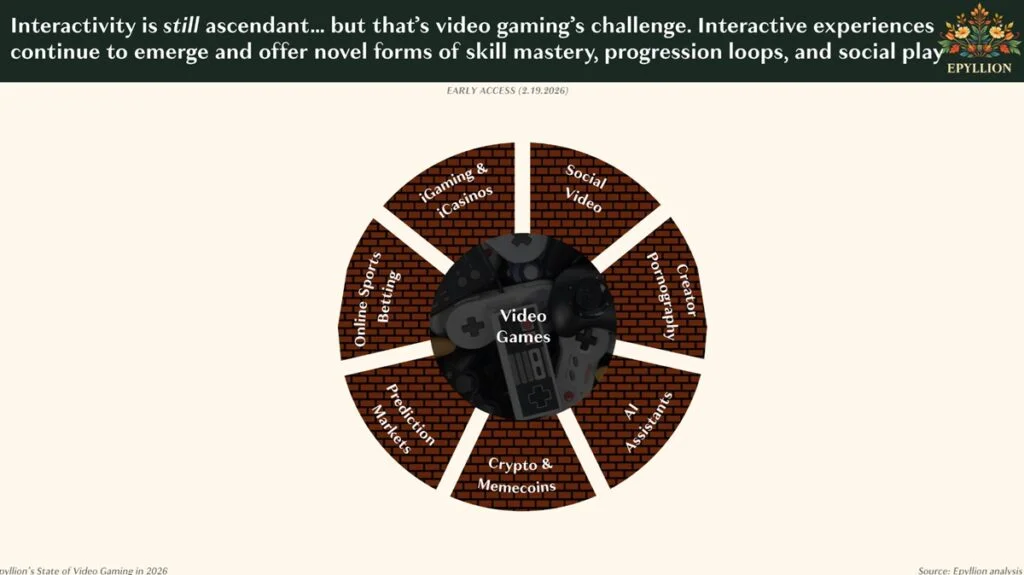](/articles/372/0yOv6lK7faqEn7tcmvJXKU5JAZNAXe2J.webp) *Matthew Ball of Epyllion spelled out threats to gaming in the fight for attention. Source: Epyllion.* That pressure helps explain why publishers turn to live services. When an industry’s growth slows, companies can try to sell more to the players they already have. A one-time $60 purchase becomes a continuing relationship, with recurring payments and new content intended to keep players engaged. The numbers may work for a company; whether the experience remains enjoyable is a separate question. The wider industry figures also deserve a closer look. Ball put game revenue growth at about 9% in 2025, but argued that the headline obscures weak performance among Western publishers. Strip out several points attributed to Chinese companies selling at home and their share of the global market, 2% to 3% tied to Roblox’s user-generated content growth, and some platform revenue, and Western publishers are left with roughly zero growth. That makes the industry’s apparent health look less convincing. One counterexample is *Black Myth: Wukong*. The game sold more than 20 million copies in its first month, and Dean Takahashi later cited sales of 25 million. Its success showed Chinese players that their mythology could anchor a major hit, and that games rooted in Chinese culture could find a global audience. That’s a meaningful signal for investors: Asian companies with deep pockets may see better opportunities in building local hits than in pouring money into Western publishers. [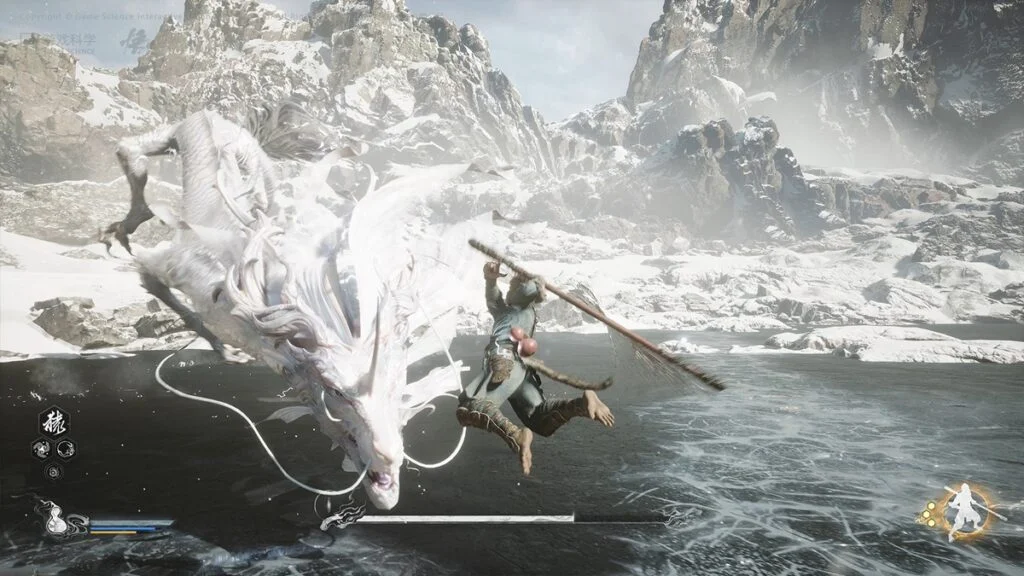](/articles/372/AyKM1yebzYVTLkft2bd4eBU14A31HzRc.webp) *Black Myth: Wukong sold more than 20 million copies in its first month.* [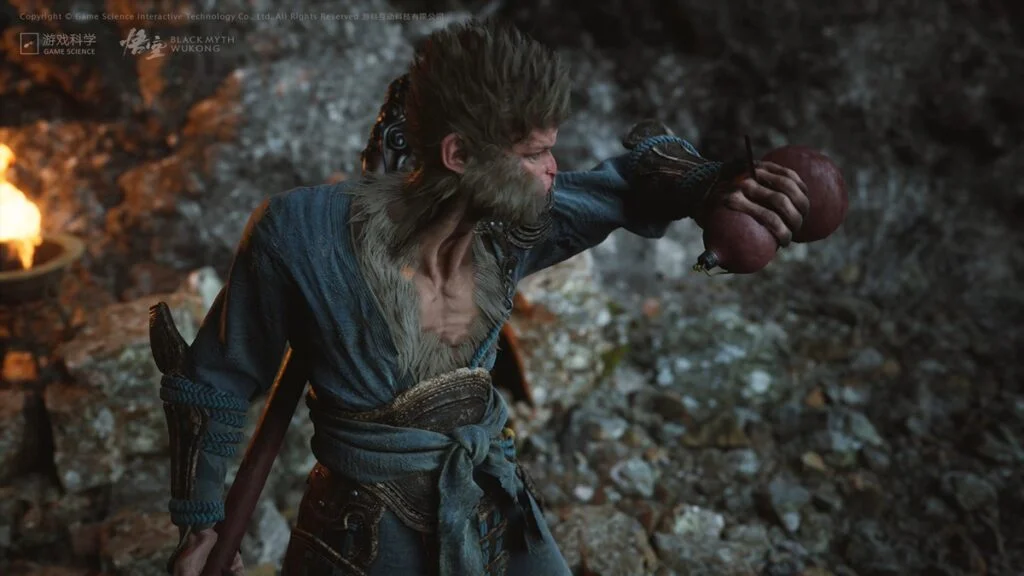](/articles/372/LQipfcoNvZMhU18Vv63ZV8bK0sGfPoYf.webp) *Game Science had a major hit with Black Myth: Wukong. Is it a lesson for China?* The shift is visible in employment, too. Amir Satvat, who tracks game industry jobs, estimates that North America lost about 11% of its gaming jobs over five years, while the rest of the world grew by around 0.5%. The global total, estimated at roughly 750,000 jobs, stayed broadly stable; the geography changed. California accounted for 47% of worldwide game industry layoffs in 2025. AI is now the next test of whether established companies can adapt. The debate echoes earlier enthusiasm for the metaverse and blockchain. During the pandemic, the metaverse was sold as the future of online social life; when people returned to in-person routines, investment dried up. EA CEO Andrew Wilson once told investors there was “no question that blockchain is the future of gaming,” with a promise that players could carry purchased characters and items between games. Developers and players largely saw crypto schemes, not compelling games. Some people hear the same sales pitch in AI: investors are excited, executives promise cheaper AAA production and a steady flow of live-service content, while players worry that the money is funding a confidence trick rather than better games. The comparison has limits. AI could change how games get made, so dismissing it as another metaverse cycle seems premature. But enthusiasm alone doesn’t prove that it will produce better games—or that Western studios will benefit. The regional stakes are real. If Chinese studios use AI to make games more efficiently while Western publishers hold back, China could gain market share. Government policy complicates that picture: China both supports technology development and regulates its market, while Western companies operate with less regulation but many are choosing not to adopt AI. It’s not yet clear which mix will produce better results.Big publishers make room for smaller studios
Microsoft’s gaming business faces its own reckoning. Satya Nadella has signaled that Xbox should stand on its own financially, a view that makes sense to business leaders but worries gamers. Microsoft can compare gaming’s returns with the money its AI divisions earn from software, servers and data centers. Takahashi thinks Nadella may regret how the acquisitions turned out, but sees the demand for each business to justify itself as fair. That change has meant layoffs and sales of some acquired businesses. Microsoft is concentrating on established franchises such as *Minecraft*, *Halo* and *Gears of War*, while trying to get the Xbox business back into shape. It has still invested in new work, including Hideo Kojima’s *Physint* after Sony cut the project. New intellectual property remains possible, but the company’s first task is stabilizing its existing operations. Asha Sharma, Xbox’s new CEO, has that assignment. There’s an opening for smaller developers in that retreat. One indie studio CEO described his team as “the mammals”: agile competitors that can survive while the industry’s dinosaurs reorganize. The metaphor is pointed. Large publishers have the reach and budgets, but their focus on proven franchises can leave less room for surprises. If Sony and Microsoft underinvest in the next generation of ideas, indie studios may supply them. AI could widen that opening by giving designers tools to build and test ideas without waiting on programmers. Alex Xu says Chinese developers are using AI coding tools this way, while treating generated art cautiously: they may produce many images and choose only a small number that meet their standards. Players, he argues, judge the result by the experience as well as by how the studio made it. One example is a text-based game set in the Ming Dynasty, where the player becomes the dynasty’s last emperor. Its premise turns a limitation of AI—forgetting instructions—into part of the story: courtiers disregard the emperor’s orders, making the system’s lapses feel plausible in context. Players have even joked about giving the emperor an atom bomb. The design uses AI to create an unusual interaction, not to replace the game’s central idea. That distinction matters. AI can be trained to produce predictable code, where consistency is useful; creative work may benefit from looser boundaries. Xu’s argument is that designers’ imagination remains the scarce ingredient, with AI serving as a tool. Takahashi sees Western companies exploring AI in areas such as security, too, and points to his interview with game industry technologist Glenn Fiedler as an example.The strongest argument for AI in game development may come from someone who started out skeptical. After years of contributing open source code, one developer put Anthropic’s latest Claude model, called “Fable 5” here, to work on that codebase. It uncovered security weaknesses he hadn’t anticipated: attacks that would be too laborious for most people to try, but well suited to a machine’s persistence. He then used AI to patch the flaws. The experience changed his view of AI’s value in programming—and led him to reconsider its role in creative work, too.
That shift matters because the line between technical and creative work is thinner than it sounds. Generative AI can let players make characters on the fly, including characters they couldn’t create themselves. U.K. developer 10Six Games, run by Susan Cummings, is building a game in which players generate characters to help fight zombies. Studio Atelico is working on a similar idea. These systems give players a new way to shape what appears in a game, though how entertaining that remains over time is still an open question.

Other experiments put AI characters into the play itself. Owlchemy is working with Canada’s Artificial Agency on a game set in a coffee shop, where one human coordinates three robots over voice requests as they prepare food for customers. The robots sometimes misunderstand, and the player has to figure out how to give instructions they can follow. That friction is part of the humor—and a reminder that the quality of these experiences depends on how well the systems respond.
AI may have a quieter role behind the scenes, too. Game art teams can use generated images to explore concepts and build prototypes faster, then handcraft the final art once the team has settled on a direction. That’s a sensible division of labor: use AI to make early ideas easier to see and compare, while leaving player-facing artwork to human artists. It could shorten the path from an initial concept to a working prototype without asking generated art to carry the finished game.
Alex Xu described a related change in how designers and programmers communicate. In the past, designers might hunt through older games for video clips that showed what they had in mind. Now, tools such as Seedance can help them create a video of the intended gameplay. Designers can also use AI to build a rough version themselves and ask, in effect, “What if the game worked like this?” Xu said small studios are trying these approaches more readily, while larger companies move more cautiously because players can react strongly to the use of AI.
That caution is understandable. A tool can speed up production and still create questions about authorship, player trust, and the finished experience. But the early uses suggest a practical case for AI in game development: it can help teams communicate ideas, test possibilities, and give players new ways to create. Whether those gains justify wider adoption will depend on what players actually enjoy—not on the novelty of the tools.
Why games, after technology

Asked why he moved from covering technology toward games, Dean Takahashi gave a simple answer: games were more fun. He’d heard that staying focused on technology and AI might have been better for his career, but playing games was the payoff that made learning about technology worthwhile.
He remembered making MS-DOS boot disks to free enough PC memory to run games. Today, he points to The Last of Us, Halo, Call of Duty, and Gears of War as games that bring people enjoyment, often with friends. During the pandemic, Call of Duty: Warzone helped keep his mind happier and focused. The hardware and software mattered because of what they let people do with them.
What technology is for
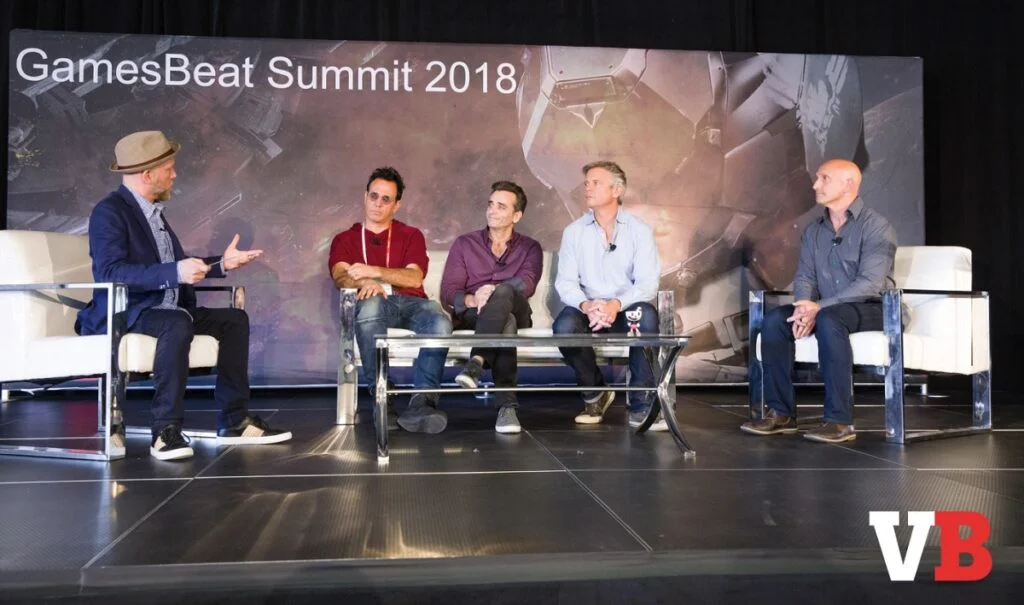
Takahashi’s most provocative claim is that Nvidia and other technology firms shouldn’t necessarily remain the world’s most valuable companies. He thinks entertainment and game makers could ultimately earn that place by creating things people love, even after the AI era. It’s a bold forecast, and the fragment offers no evidence that market valuations are about to shift in that direction. But the underlying point is persuasive: technology reaches its purpose through what people use it to make and experience.
AI may eventually hit a technical ceiling. Even if it does, the experiences built with it can keep mattering. For Takahashi, fun is a worthy purpose in its own right—and a reason Nvidia should keep its gaming division.



Discussion
Sign in to join the discussion.