Dia Lacina and Rob discuss Ace Combat 8’s storytelling ambitions, cockpit perspective and lineage alongside Freespace and Wing Commander.
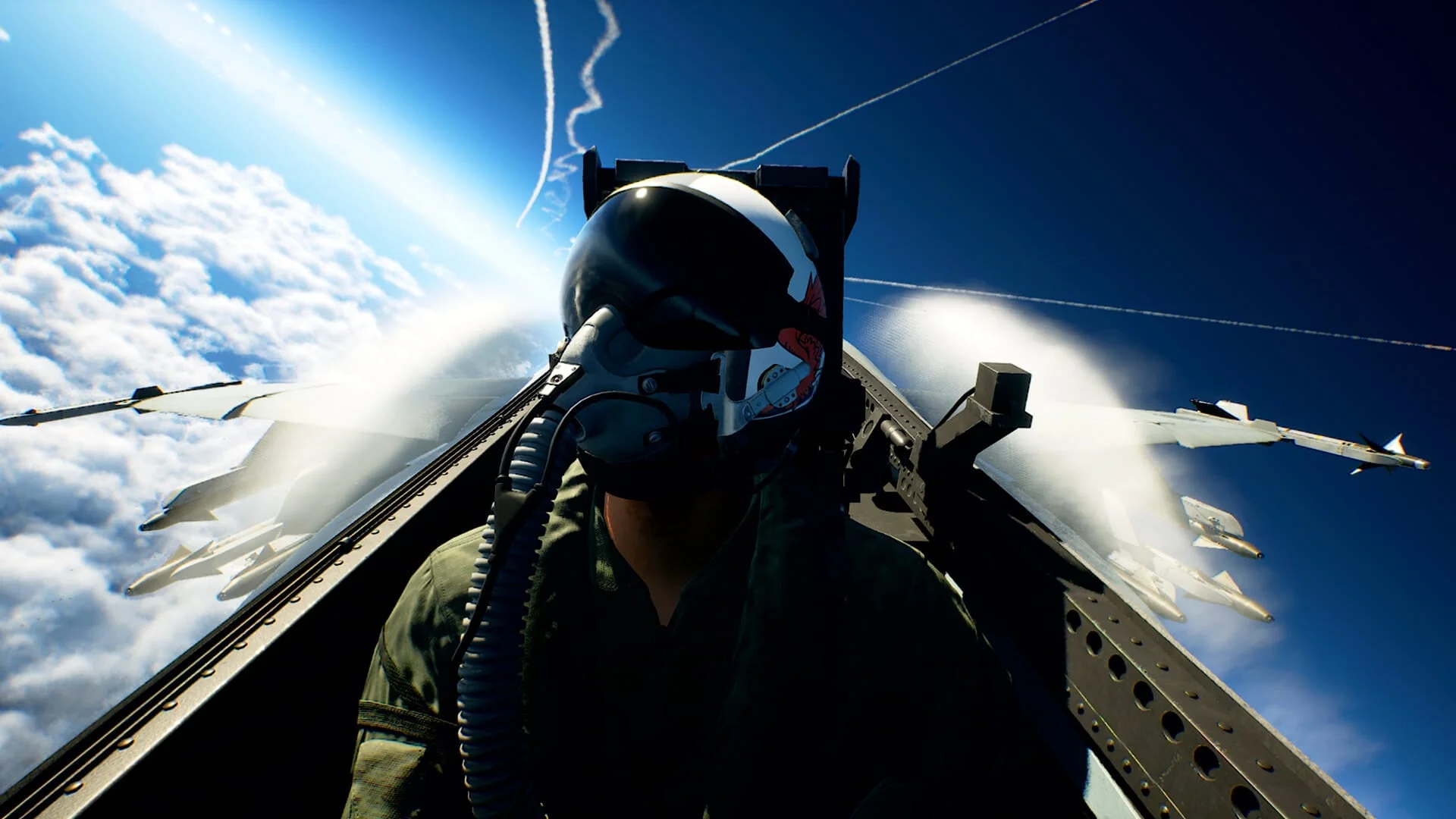
The cockpit as a storytelling problem
Ace Combat 8’s ambitions raise a familiar challenge: how do you tell an expansive story from inside a cockpit? Dia Lacina joins Rob to discuss the game’s narrative choices and how the series has changed its approach to storytelling.
The question matters because a cockpit is both a compelling dramatic setting and a narrow one. The pilot sees the world through instruments, radio calls, and the view beyond the canopy. That perspective can make danger feel immediate, but it can also keep the audience at a distance from events unfolding elsewhere. A story that wants to feel larger than a single mission has to find ways to make that limited viewpoint carry wider stakes.
In an action game, the player’s attention is already divided. They’re watching targets, tracking the aircraft, responding to threats, and listening for information. Dialogue and plot can’t assume the player is sitting still, absorbing every line. The writing has to work alongside play: a radio exchange can establish urgency during a mission, while quieter moments can give an event room to register. Neither approach is automatically better. The choice depends on what kind of experience the story is trying to create.
That’s why discussion of Ace Combat 8’s narrative choices is more revealing than a simple question of whether the plot is “good.” The larger issue is how the series wants players to encounter its fiction. Does the story sit mainly around the flying, or does it use the act of flying to shape what the player knows and feels? The distinction sounds small. It can define the whole relationship between mission and narrative.
What a series inherits
The second part of the conversation looks at how Ace Combat has changed its approach to storytelling. A long-running series carries expectations even when each new entry wants to do something different. Players may bring assumptions about tone, scale, character, and the role of the pilot. A new game can honor those expectations, question them, or shift the emphasis. Each choice affects how its ambitions will be judged.
That history also creates a practical writing problem. A story has to make sense to newcomers while giving returning players a reason to care about its particular direction. Too much explanation can slow the action; too little can leave the stakes hazy. Similar issues appear in other long-running game series, where a familiar format can become a useful storytelling language but can also make change harder to communicate.
Here’s the thing: bigger ambitions don’t automatically produce a bigger emotional effect. A wider conflict may offer more room for political tension, competing viewpoints, or consequences beyond one mission, but scale alone can make events feel remote. The intimate details still have to land. A specific choice, a strained exchange, or a moment of uncertainty can give a broad conflict a human point of entry. Without that connection, spectacle risks becoming noise.
This is more significant than it looks. In a game built around flight and combat, the player’s control is part of the storytelling vocabulary. The player isn’t only watching a pilot take risks; they’re making decisions about movement, timing, and attention. That participation can create a strong sense of responsibility, though it doesn’t guarantee that the story will make those actions feel meaningful. The writing and the play have to support each other.
Why Freespace and Wing Commander belong in the discussion
Lacina and Rob also bring Freespace and Wing Commander into the conversation. Those comparisons give the discussion a broader frame: space combat games have long faced a related challenge, asking players to connect the pressure of operating a vehicle with events that reach beyond its immediate surroundings. The comparison can help clarify what Ace Combat 8’s ambitions are trying to do, even without treating the games as interchangeable.
Different settings and series histories can produce different storytelling habits. But the underlying question travels well: what can a player understand from the seat of a craft, and what must the game communicate through other means? Mission briefings, dialogue, character interactions, and the pacing between missions can all help establish context. Each device comes with a trade-off. Briefings can orient the player, while too much exposition can make the action feel like a pause in the story rather than part of it.
The older games also provide a useful reminder that comparisons aren’t verdicts. They’re tools for asking sharper questions. If a newer game reaches for a broader story, the relevant test isn’t whether it resembles a remembered predecessor. It’s whether its chosen perspective makes the story clearer, more affecting, or more coherent with the experience of play. Nostalgia can make earlier approaches seem tidier than they were; criticism can make novelty seem more valuable than it is.
And yet, bringing those games up does more than summon history. It invites a conversation about what players expect from this kind of fiction, and how those expectations have changed. (And this is the part most people overlook.) A comparison can reveal not only what a new game borrows or leaves behind, but also which storytelling questions remain difficult across generations of games.
What the ambitions will have to prove
The source of the interest is clear: Ace Combat 8 is being discussed in terms of ambition, narrative choices, and the series’ changing approach. The available description doesn’t specify the game’s plot, characters, or particular storytelling devices, so the discussion’s value lies in the questions it raises rather than in claims about how the finished story works. That distinction matters. It keeps expectations tied to what’s actually being discussed.
If you’re working in this space, the useful question is whether a game’s story respects the player’s attention. A cockpit gives writers a strong point of view, but it can’t carry every kind of information equally well. The strongest approach is usually one that understands those limits and uses them deliberately: letting action communicate what it can, then making room for context where the player can absorb it.
That’s a craft problem, not a promise of success. An ambitious narrative can still struggle if its scale outruns its characters or if the player’s actions feel detached from the consequences being described. A more restrained story can feel expansive when its perspective is precise. The balance is difficult. Sometimes, the key is what the game leaves unsaid.
For now, the conversation between Lacina and Rob offers a way to assess the question before reaching a verdict: place Ace Combat 8 alongside the series’ own storytelling history and the space combat games that make useful comparisons. The result won’t settle whether the game’s ambitions work. It can show what those ambitions need to accomplish: make a story feel broad without losing the immediacy of the cockpit.



Discussion
Sign in to join the discussion.