DMZ pairs shifting enemy encounters and persistent squad progression with meaningful extraction stakes, though a failed run can cost your entire loadout.
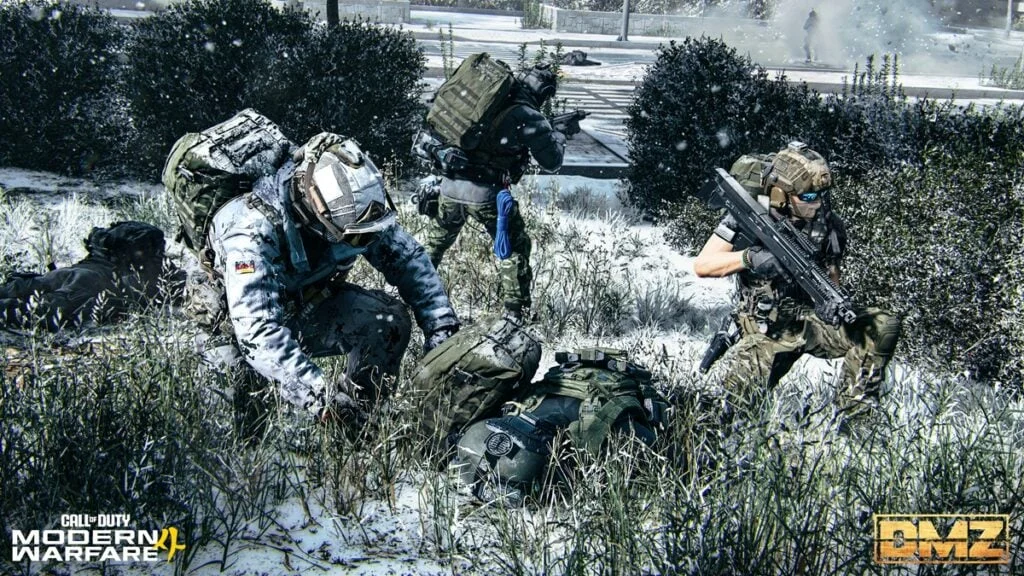
DMZ’s strongest idea is that a match can change while you’re still deciding what to do. In Infinity Ward’s extraction mode for Call of Duty: Modern Warfare 4, enemy forces move, weather shifts and every extra stop can turn a routine loot run into a scramble for the exit. After playing at the studio’s Los Angeles headquarters, my read is that DMZ has the unpredictability to hold attention—and enough ways to soften failure to invite players who find harsher extraction games off-putting.
The mode takes place in Hajin, a fictional exclusion zone on the Korean Peninsula, where players deploy as squads to recover weapons and technology. You’ll weigh contracts and valuable targets against the risk of drawing a response from hostile forces or rival players. Extraction is the central wager: leave with what you found and build toward future runs, or stay longer in search of a better haul and risk losing your gear.
That tension made my six hands-on matches feel distinct. Some lasted about 15 minutes because we took an early exit; others stretched past 40 minutes. In one run with Infinity Ward multiplayer creative director Joe Cecot and co-op partner Ned Jordan of The Gaming Temple, we stayed too long chasing an opportunity. The result is shown here:
A failed extraction or death can wipe out your armor, weapons, loot and kit. Losing a character doesn’t mean recovering their body in the field: you can buy that character back through the Forward Operating Base (FOB). You also earn in-game cash when you extract and can use the FOB’s 3D Printer to replace weapons and attachments. But a heavily upgraded gun costs more to rebuild, and cash can run short. The systems ease the setback without removing the pressure to choose your squad and your risks carefully.
Risk has to feel worth taking
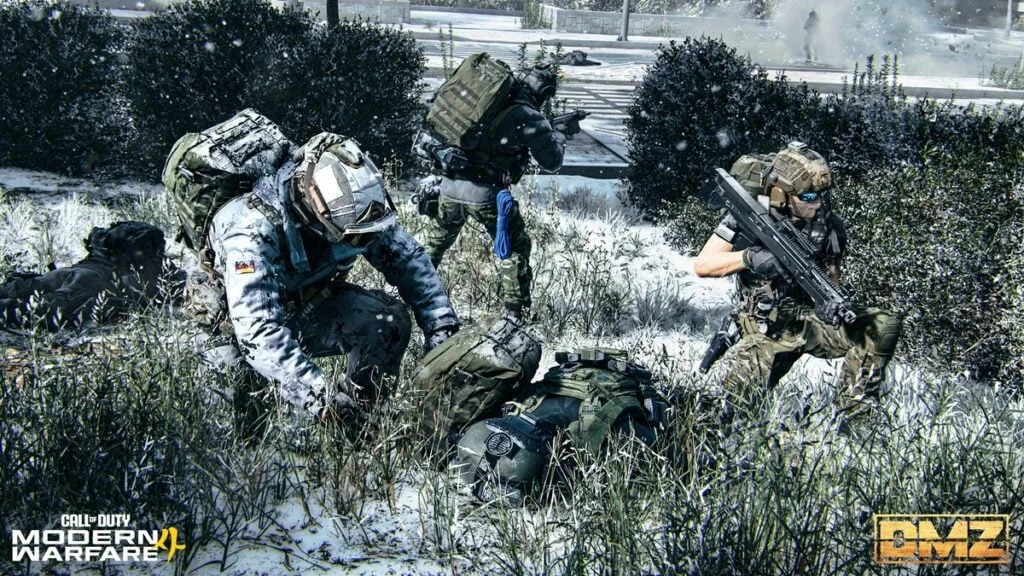
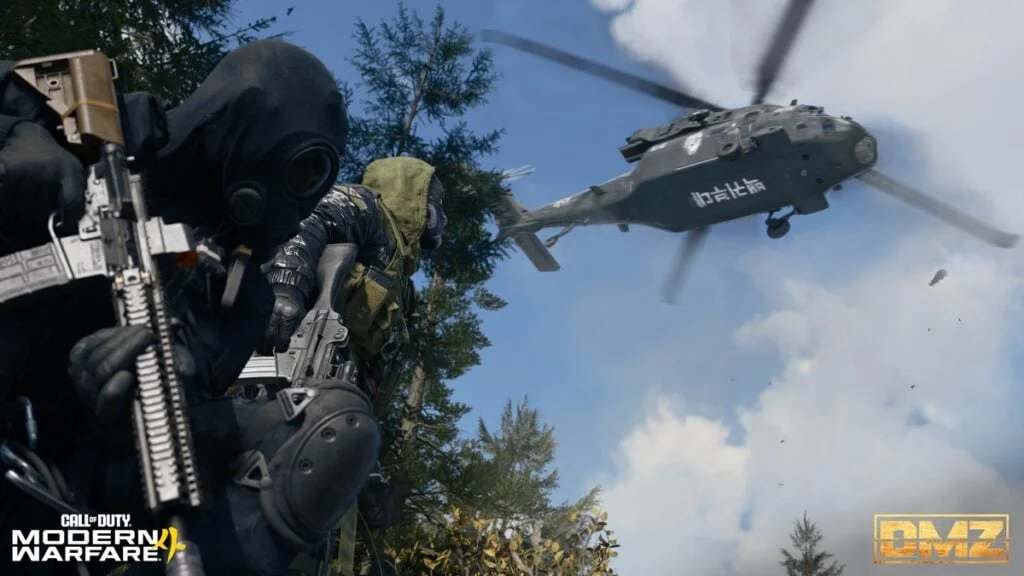
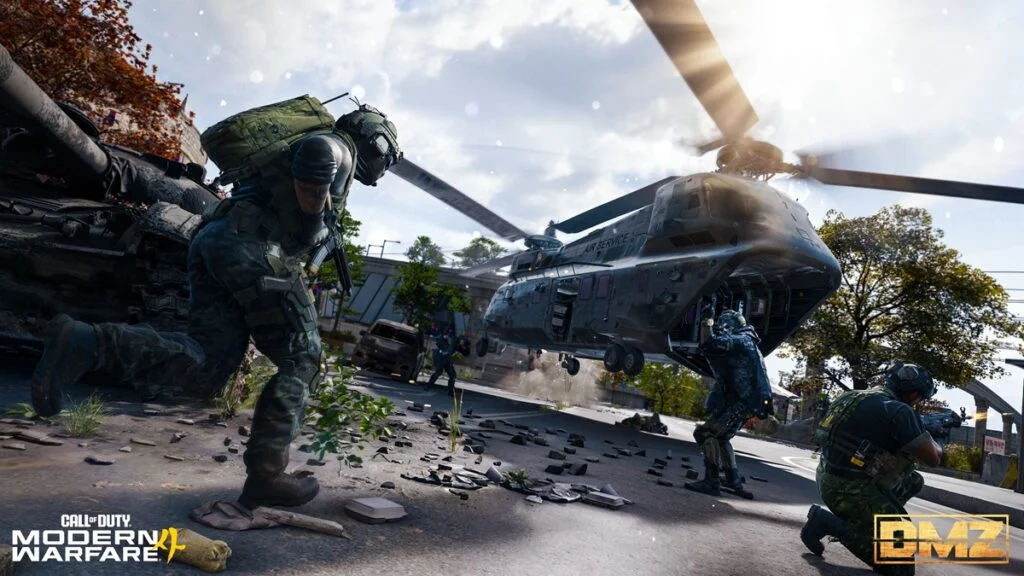
The map’s activity gives those choices weight. Enemies can appear in unexpected places, including gas stations where players may need to refuel a stolen vehicle. Sunny weather can give way to driving rain. Stay in one spot and keep fighting, and hostile forces may bring in reinforcements, attack helicopters or armored troops carrying riot shields. A passing convoy can be tempting to attack; Cecot advised us to leave it alone when we were already in trouble.
Players can take on daily orders, hunt high-value targets, retrieve a wounded officer or explore locations where rare loot is guarded. In one mission Cecot demonstrated, our squad extracted a wounded North Korean officer from a hospital, pushing a bed through a corridor and into an elevator while under fire. The hospital offered a limited refuge from North Korean NPCs, but human players could still come looking for healing supplies.
Other points of interest include a tank graveyard, a toxic pool with underwater loot, missile silos and a military base. Hajin’s danger areas range from mild to critical, and the most threatening locations call for stronger equipment and more experience. Later, established squads can challenge helicopter-borne lieutenants, plant bombs at a military base or go after a difficult tank. The encounters invite preparation, but they also give players a reason to trade tips about which fights are worth attempting.
A new direction for DMZ
The name returns with a different structure from the mode that launched in beta alongside Warzone 2.0 and Modern Warfare II in 2022. That version offered co-op players a way to loot and fight NPCs outside the battle royale format, then gained features such as missions, Active Duty slots, an FOB and extraction streaks. Infinity Ward stopped supporting it in 2023.
Cecot said the team initially wanted to reach players who were interested in extraction games but didn’t want the intensity associated with Escape From Tarkov. After the first version, the studio put the mode aside and continued working on it. The new DMZ is designed as a quick-entry sandbox where players can bring weapons they’ve leveled through Modern Warfare 4’s Gunsmith, while still putting valuable equipment at risk.
“When we were making this, we felt strongly that the tension you felt because you were afraid you might lose some stuff–there was value and power to that. It created this more rewarding experience. The challenge was to do that in a way where loss didn’t feel as severe. You want the tension and fear of loss, but you don’t want it to be too punishing. You want people to come back. They’re playing for that feeling,” Cecot said.
Hajin’s fiction places that tension in a conflict zone near North Korea, Russia and South Korea, where a nuclear radiation leak has left military equipment and weapons stockpiles behind. Players act as shadow CIA assets sent behind enemy lines to secure them. Rogue Operators, enemy combatants and other squads all operate in the same server, so a mission’s shape depends on who else is nearby as much as on its stated objective.
Persistent progression between runs
The FOB is where each operation begins and ends. Players can store items in a stash, buy weapons with earned cash, test guns at a firing range, check bounty boards for player killers and unlock additional upgrades. Its 3D Printer turns recovered materials into equipment and rarer gear; materials are disassembled automatically during missions, keeping crafting from interrupting a firefight.
Persistent Operators have their own progression, too. Players spend Trait Points earned during missions across one of three trait trees, with each tree emphasizing a different set of abilities, including combat and scavenging. Points belong to the Operator who earned them. That gives squads a longer-term reason to care about who they send into a run, especially when a failed deployment can erase the equipment they carried.
DMZ supports several ways to spend time in the zone. Story Missions add objectives tied to the Modern Warfare 4 campaign and unfold at specific Hajin locations alongside other players. Dynamic Operations offer Supply Drops, while Free Roam lets squads set their own priorities. Convoys travel across roads, aircraft cross the skies, and hostile forces reposition weapons of mass destruction and other strategic assets. The world’s moving parts make a plan provisional as soon as a squad deploys.
What the mode asks of players
DMZ’s open structure is both its appeal and its biggest time commitment. A squad can extract after a single mission and return to the FOB in about 15 minutes, or remain in the zone for more than 40 minutes. Staying longer can expose players to more opportunities—and more ways to lose everything they’re carrying. With a large map full of buildings, terrain and underground spaces, it’s plausible that regular players will keep finding places they haven’t explored.
Early access began after the single-player launch, with multiplayer scheduled to start October 23. The wider Call of Duty: Warzone integration is planned for Season 1: Modern Warfare 4 content and seasonal progression will connect the two games. Season 1 will also bring Hajin to Warzone as a large-scale battle royale map, while the compact Zodiac Resurgence map centers on the DRC Advanced Systems drone facility. Warzone players will get their first look at Hajin through DMZ.
Other announced changes include an Operator Skin Toggle for Warzone that affects only what a player sees, continued access to previously earned and purchased content through Carry Forward, and double XP tokens that count down only during matches. Weapon progression will reduce repeated attachment unlocks, and players can choose between a traditional Prestige reset and an option that preserves Create-a-Class unlocks. Infinity Ward also said beta feedback prompted adjustments to weapons, time-to-kill, spawns, movement, audio and visibility.
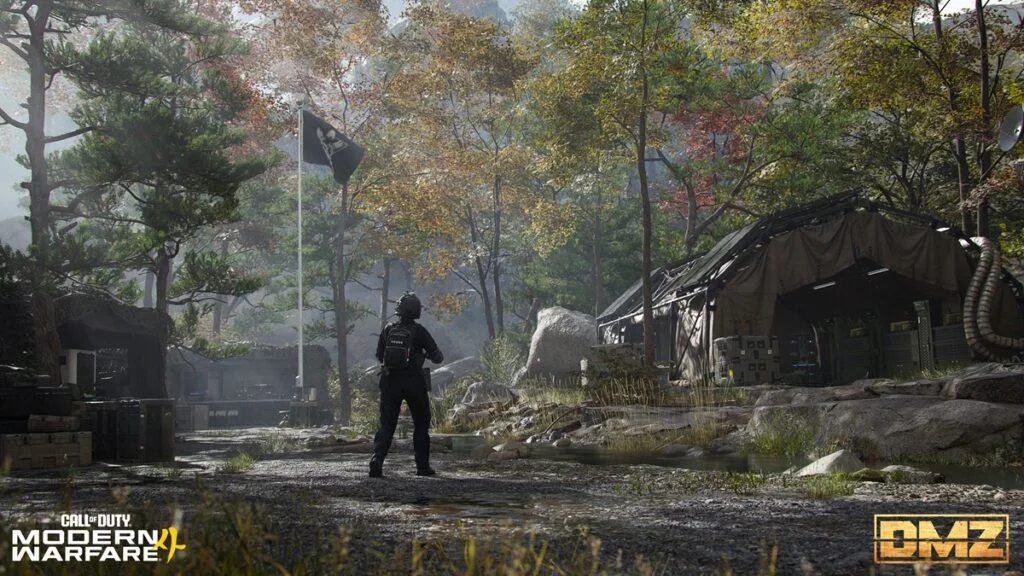
My six matches left me with a favorable impression: 4.5 out of 5 as a standalone mode. DMZ makes its strongest case when its active enemies force a squad to rethink a plan, and when the threat of losing gear turns extraction into a real decision. The option to finish a focused run in roughly 15 minutes helps balance the longer sessions. Its lasting appeal will depend on whether Hajin’s shifting encounters continue to produce fresh choices once players know the map.

Disclosure: Activision paid for my travel to an event where I played the full game. GamesBeat is solely responsible for this story.
Read the DMZ mode overview for more details.
The post DMZ is a wild extraction shooter inside the living world of Modern Warfare 4 | hands-on review appeared first on GamesBeat.



Discussion
Sign in to join the discussion.