Seagate’s FireCuda Forge pairs a user supplied NVMe SSD with an upgradeable hard drive, using Alkemi to prioritize frequently accessed data.
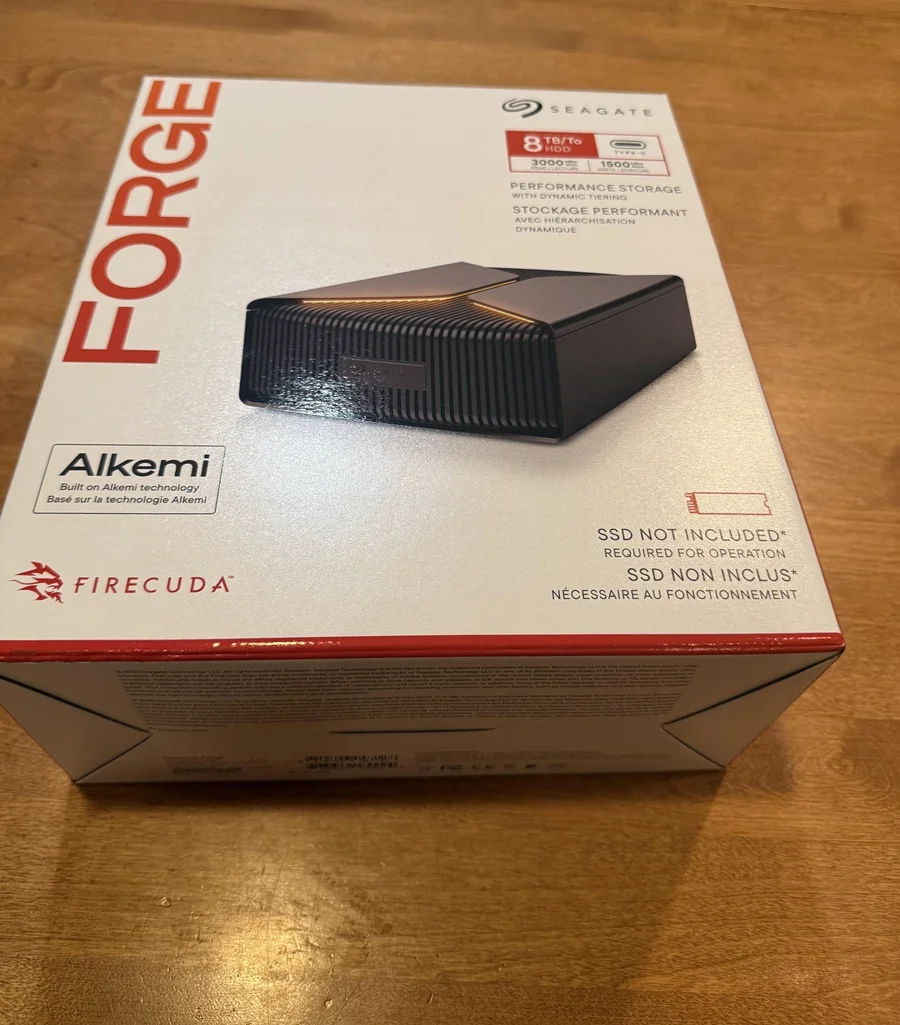
Seagate’s FireCuda Forge aims to ease a familiar storage tradeoff: quick access to active files versus room for a large library. Its Alkemi platform manages data across a user supplied NVMe SSD and an internal hard drive, presenting them as one volume. The approach could suit gamers and creators who want responsive access to frequently used content alongside space for games, video and other large files.
How Alkemi manages storage
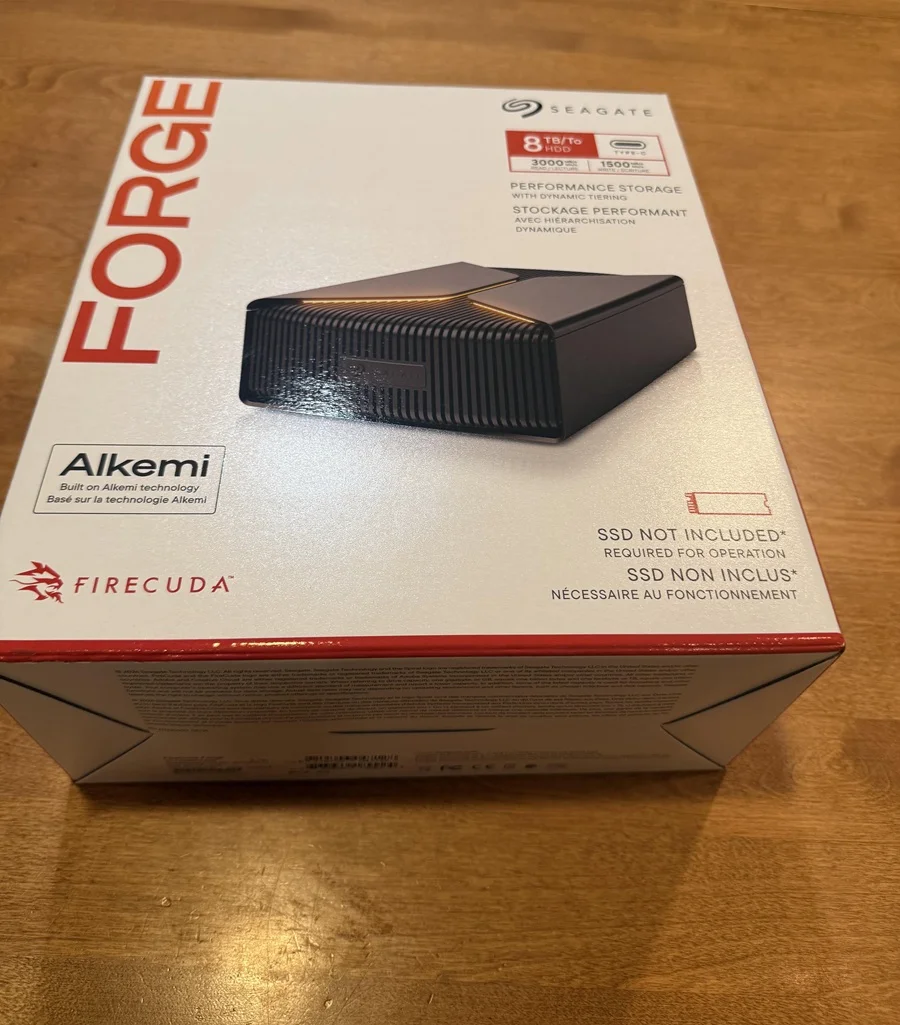
Alkemi’s dynamic caching technology tracks data use and prioritizes frequently accessed or otherwise relevant content on the SSD. The hard drive holds larger collections, while the platform handles placement in the background. Users don’t have to move files between drives or decide where each one should live. That’s the practical promise: keep a large library in one place while giving the system room to favor the files most likely to matter now.
That doesn’t mean every file gets SSD speed. The system favors content based on activity patterns, so its responsiveness depends on what’s being used and how Alkemi prioritizes it. A file that hasn’t been accessed recently may remain on the hard drive until the platform’s behavior brings it forward. Seagate describes this as bringing data tiering familiar from data centers to desktop storage. The idea is straightforward; the experience will depend on whether the software’s choices match the user’s habits.
FireCuda Forge is the first product built around the Alkemi platform. Seagate says the system combines the user’s NVMe SSD with its high capacity hard drive and onboard processing in one enclosure. Company executive Lance Ohara said the product is intended to combine the responsiveness users want with the capacity they need. That description sets a broad goal, but it leaves the key question to day-to-day use: how consistently does the caching reduce waits for the particular mix of files a person opens?
Capacity, performance and compatibility
The Forge is an external drive connected directly to a computer, not network attached storage. That makes it a more direct fit for a workstation or gaming setup than for a household that wants shared access across a network. It supports USB4 for compatible systems and is designed for Windows 11 and macOS 26 and later. Seagate lists read speeds of up to 2,500MB/s and write speeds of up to 2,000MB/s. Those are stated maximums, so actual results will depend on the connected computer, workload and storage components.
Buyers provide their own compatible NVMe SSD; it’s required for the system to work. The internal hard drive is upgradeable, and Seagate says the unit can support other capacities as users expand storage. The SSD and hard drive can each be replaced, but either swap requires a full backup and restore because Alkemi manages the two together rather than as independent volumes. That maintenance requirement matters: a single-volume experience simplifies everyday file handling, but makes component replacement a more involved task.
That design gives buyers flexibility to choose an SSD or reuse one they already own, while keeping the storage experience unified. It also means the Forge’s practical performance depends in part on the selected SSD and on which files Alkemi has prioritized. If you’re working in this space, the important distinction is between peak transfer figures and the feel of repeated use: a fast connection can move data quickly, but it can’t guarantee that every needed file is already on the faster storage. A unified volume, with tradeoffs.
Pricing and availability
Seagate says the FireCuda Forge is available through its online store and authorized partners in 8TB and 20TB configurations. Prices start at $699 for the 8TB model and $899 for the 20TB model; availability may vary by market. The listed prices also need to be weighed against the required user supplied SSD, which adds a component choice and cost that buyers will need to account for. The headline capacity and price therefore don’t describe the complete setup on their own.
The product targets people managing both demanding workloads and growing libraries, including gamers capturing gameplay and creators working with large video files. IDC projects annual global data generation will rise from 218 zettabytes in 2025 to more than 718 zettabytes by 2030, a forecast that underscores the storage pressure behind products like this. More data creates a clear need for capacity, but it doesn’t by itself prove that a hybrid drive is the right answer for every user. The numbers here are underwhelming as a performance case: they describe a broad storage problem, while the buying decision turns on how well one device handles an individual workflow.
What the design means for users
The Forge’s appeal will hinge on whether its adaptive caching keeps frequently used content close at hand while its hard drive absorbs the bulk of the collection. That’s a sensible division of labor, especially for people whose active projects change less often than their overall library. And yet, the system’s value rests on the quality of its prioritization, not simply on the presence of an SSD and a hard drive in the same enclosure.
Here’s the thing: fewer manual file moves can save attention as well as time, but users give up some control over where data sits. For a person who regularly returns to the same games or project files, automatic placement could make a large archive easier to work with. For workloads with rapidly changing files, the benefit may be less predictable. This is more significant than it looks, because the product’s central promise is an experience managed by software, and that promise has to hold across ordinary use, not just in a maximum speed specification.
Seagate has put a clear proposition on the table: one volume, expandable capacity and SSD caching for active content. The practical test is whether that combination feels simpler without making backup, upgrades or performance behavior harder to manage. That said, FireCuda Forge is an early product for Alkemi, so the buying decision will rest on how much a user values automatic file placement and whether the required SSD fits their budget and setup.



Discussion
Sign in to join the discussion.