Gust's Junzo Hosoi says internal doubts almost cut Atelier Karia's body shape change feature. A fan survey settled the debate.
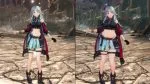
Atelier Karia's body shape change feature was almost cut before it ever reached players. Producer Junzo Hosoi says the debate inside Gust and Koei Tecmo was real, and the studio ended up handing the final call to the people who'd actually play the game. That's an unusual admission. Most studios prefer to present a feature as the obvious choice from day one, so hearing that it nearly died in a meeting room is refreshing. It also tells you how seriously the team took the question.

Here's how it works. Karia's body shape change feature is optional, and her figure shifts depending on how much she eats while snacking. If that's not your thing, you can lock her at a preferred shape even with the feature switched on. That's a design decision that matters more than it first appears. It turns a mechanic that could have been a fixed statement into a setting, and that shift from authorial choice to player choice runs through everything that follows.
Eating as a design pillar
The idea grew out of eating being one of the game's core concepts. Hosoi put it simply: "If you eat, wouldn't it be natural for your body shape to change as well?" The team felt it could make the protagonist feel more lively and believable. It's a logical extension of the game's central mechanic, and that's probably why the idea gained traction in the first place.
Here's the thing about mechanics that track player behavior. When a game asks you to manage something, like eating, and then ignores the result visually, the disconnect is hard to miss. Players tend to notice when a system has consequences they can't see. Tying a character's appearance to a routine action closes that gap, and that's a reasonable instinct for any team building around everyday life systems.
I'd still be careful about overselling it. Plenty of games have experimented with visible change in characters, and the results vary widely depending on tone and execution. What makes this approach stand out is its restraint. The change follows a behavior players already choose, rather than a reward or punishment handed down from above.
A split inside the studio
Not everyone was sold. Hosoi acknowledged that people outside the development team held differing views, and the studio began to wonder whether leaving the feature out would be the safer choice. Body type is a sensitive subject, and that hesitation makes sense. Still, the team didn't want to decide for players on a topic where opinions vary so widely.
Here's what I find telling. Internal debates like this often get smoothed over before a feature is announced, so the fact that Hosoi discussed it openly stands out. It suggests the team saw the disagreement as something to engage with, not something to hide. That's rarer than it should be.
Body image features in games have a history of drawing sharp reactions, and studios usually have to weigh whether a mechanic serves the story or simply invites controversy. The team's answer wasn't to pick a side and defend it. It was to hand the question to the audience, which is a less common move and a riskier one. And yet it's easy to see why they chose it.
Letting players decide
Gust and Koei Tecmo ran a survey to let fans have the final say. The response was overwhelmingly positive, and that's what pushed the project forward. It also clarified what players wanted, which is why the team added the option to switch body shape changes on or off.
Surveys have limits, and anyone who's run one knows it. The people who respond are rarely a perfect sample of the whole fanbase, and question wording can shape answers more than teams like to admit. A survey can't settle an ethical question. What it can do is tell you whether your audience is with you, and that's useful when the alternative is guessing.
Hosoi's comments on the survey stood out to me. "Personally, even if the response had been unsupportive, I would still have felt that conducting the survey was worthwhile. I'd love to continue holding surveys like this in the future." That's a studio treating player input as a working tool, not a formality.
Most developers collect feedback after the fact, when a feature is already locked in. Asking before the decision is made is a different thing. (And this is the part most people overlook: the team committed to the survey without knowing what it would say.) That willingness to accept an unwelcome result is what separates a consultation from a press exercise.
What this means going forward
If you're working in this space, the takeaway isn't that every feature needs a poll. It's that building a mechanic around a sensitive subject without checking how your audience reads it is a gamble. Some studios will decide that's a risk worth taking. Others will want a process like this one.
The broader pattern is worth watching. Player feedback has become a regular part of how many games evolve after launch, but asking for it during development is less common. If this approach holds up, it could give other teams a workable template for features that split opinion. Maybe. Hard to say yet.
Atelier Karia: The Night Kingdom & the Guide of Memories launches for Nintendo Switch 2 on February 5, 2027. My read is that the survey approach could matter as much as the feature itself, and it's worth watching whether other developers borrow the method. The feature will get most of the attention, and that's fair. The process behind it is the more interesting story.


Discussion
Sign in to join the discussion.