Appcharge's Checkout Experimentation Lab serves tailored payment flows by player segment, with early tests lifting conversion 4.2%.
Mobile games personalize nearly everything a player sees, from offers and level pacing to pricing. The payment screen is the big exception. Most studios still show every player the same checkout, and that's an odd gap when you think about it. Checkout is where a player's intent actually turns into revenue, yet it's often treated as plumbing rather than product.
Appcharge is trying to close that gap with its new Checkout Experimentation Lab. It lets publishers run A/B tests directly on the checkout page, with each test isolating a single assumption. Winning variants can then be served to specific segments: first-time versus returning buyers, device, payment method, and country. Early results show personalized checkouts lifting conversion rates by 4.2% and the number of buyers by 3%. Here's the thing: "early results" is doing a lot of work in that sentence. Numbers from a vendor's own tooling deserve a second look before anyone rebuilds a checkout around them.
The case for fewer choices
The premise rests on research suggesting that more options make people less likely to decide. Appcharge's data points the same way. Of players who pay with a specific method, 97.7% use it at least two more times. In some countries, a single payment method holds as much as 80% market share. My read: if you already know how a player wants to pay, asking them to choose again is just friction.
This is a version of what people often call choice overload, and it shows up in plenty of consumer settings. Checkout is one of the clearest places it matters. A player who has already decided how to pay is one extra decision away from closing the app, and that decision gets harder the more options sit on the screen.
The screenshot above shows the kind of tailored checkout the Lab produces. A single image says little about performance, though. What matters is how the layout behaves across different player segments, and that's the part a static picture can't show you.
Averages hide the real story
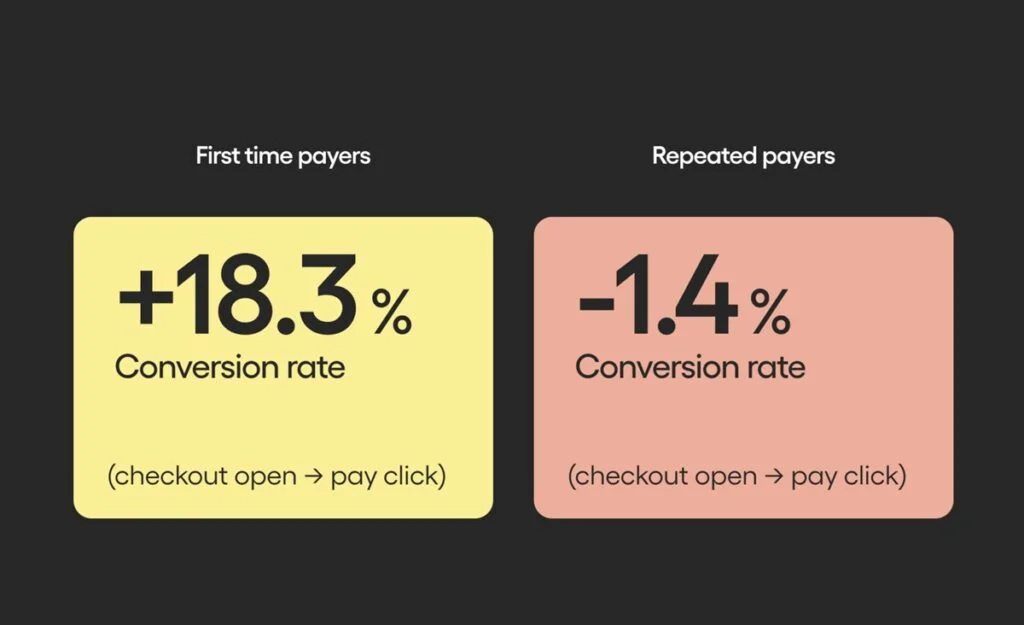
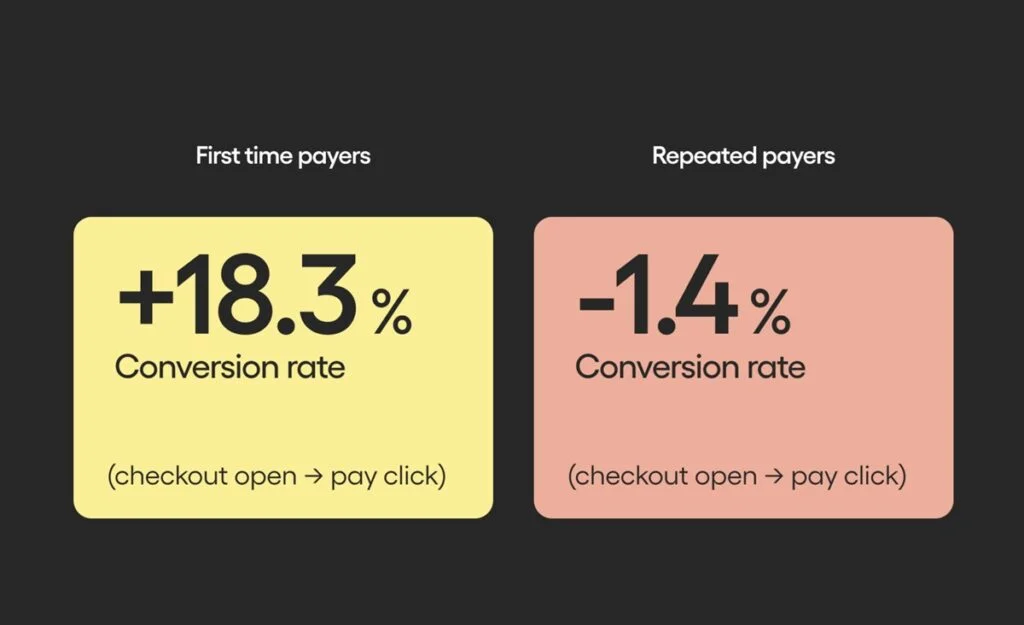
Appcharge's own experiments show why segmentation matters. In one test, the company simplified its checkout to cut the number of decision points. Conversion across the board stayed flat, and deposit per depositor fell. Break the numbers down, though, and the picture changes. Conversion among first-time buyers rose 18.3%, while repeat buyers dipped 1.4%. Splitting the results again by device, payment method, and country produced more divergent patterns. A flat headline number can conceal two groups moving in opposite directions (and this is the part most people overlook), and each group can get mistaken for the whole. If you're running tests on your own checkout, that's the warning: a result that looks neutral may be hiding both winners and losers.
"The average was hiding the real story," said Fanny Beili, VP Product at Appcharge. "What helps a first-time buyer on Android in Berlin can slow down a weekly buyer on iOS in Ohio. There is no single perfect checkout, so we needed a way to find the right one for each player and keep testing as behavior changes. Our goal is to run the highest-converting checkout in mobile games, and that means never assuming we've perfected it."
Beili's point is sound, even if it's rarely applied to payments. Her framing is also a convenient one for a company selling segmented testing, and it's fair to notice that. Still, the underlying logic holds. A single checkout is a compromise, and that compromise stays invisible until you split the data by the groups that actually behave differently.
What the math looks like
Consider a studio processing $20 million in annual DTC revenue. A 4.2% conversion uplift works out to $840,000 in additional revenue each year. Gains that small look trivial on a single test, but they compound across a publisher's full player base, which is why Appcharge treats checkout as a continuous optimization problem rather than a one-time redesign. That calculation is simpler than real life, though. It assumes a conversion lift translates neatly into revenue, and a figure drawn from early results could shrink or grow once a test runs longer.
The Lab builds on the updated Checkout Appcharge launched in February 2026 and runs through its Merchant of Record platform, which handles payments, tax, compliance, fraud, and disputes for publishers. Appcharge says hundreds of mobile games run on the platform, which processes more than $1 billion in annual DTC transactions. Partners get customizable web stores, player retention tools, and gamified shopping, all backed by local payment methods and currencies. Merchant of Record matters here. Under that model, the platform acts as the seller of record, which typically takes on the tax and compliance work a studio would otherwise handle. That's useful for publishers, but it also means the checkout you're testing lives inside a vendor's stack, and switching costs are part of the bet.
What this means for you
The real question is whether checkout becomes a standard lever for studios, the way pricing and offers already are. I'd bet the answer depends on whether studios see the payment screen as a revenue surface or as infrastructure. Studios that treat it as something to keep testing, rather than a finished product, are likely to find the gains come fastest.
If you're working on a mobile game, start with questions you can actually answer. Which payment methods dominate in your top three markets? Do first-time buyers behave differently from returning ones? Those two splits are usually cheap to pull from existing analytics, and they'll tell you whether segmented checkout deserves a real test budget.
What this coverage doesn't tell us matters just as much. The source material doesn't disclose how long the tests ran, how large the samples were, or whether the lifts held after launch. The headline lift is modest, and that's fine, but the segment results are where the real signal sits. Treat the topline numbers as directional until someone outside the vendor shows the same pattern.



Discussion
Sign in to join the discussion.