1Up Ventures’ Ed Fries and Amir Satvat see continued market growth, alongside hiring pressure, regional shifts and new opportunities for smaller studios.
Gaming’s revenue line can keep climbing while many people in the industry struggle to find work. That tension shaped a discussion between 1Up Ventures leaders Ed Fries and Amir Satvat: the market has grown over decades, but where that growth comes from, which studios capture it and who gets hired are all changing.
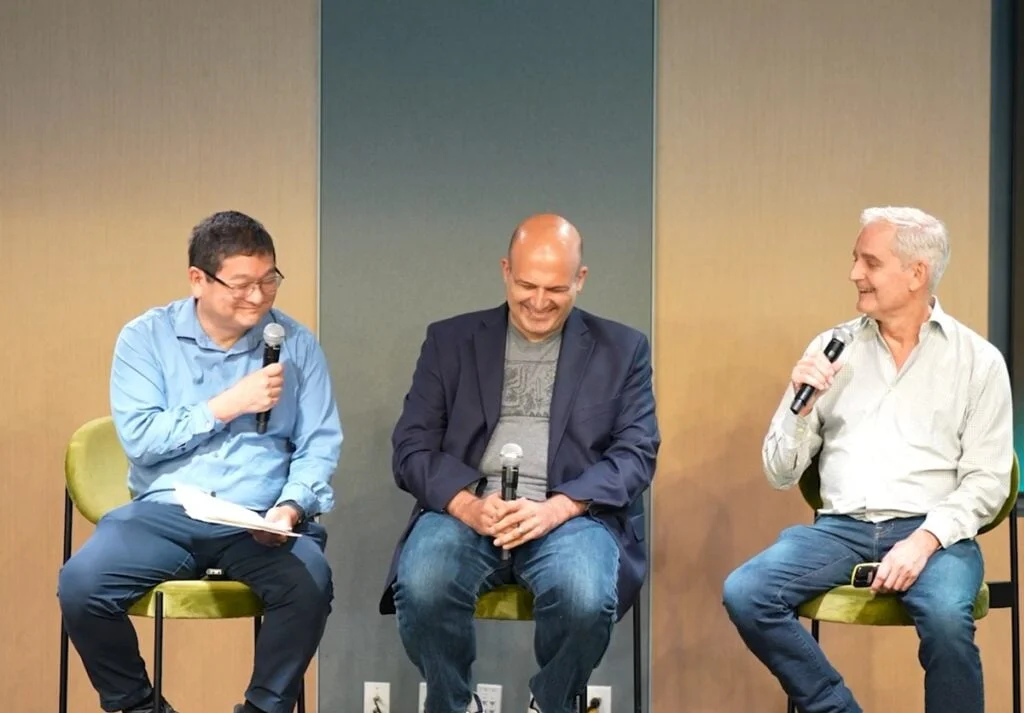
Fries approaches the question as an investor and longtime industry executive. A former head of Microsoft Game Studios, he founded 1Up Ventures, whose game studio focused fund has made 86 investments over seven years. Satvat, a general partner at the firm, brings a labor market view through ASGC.gg, the game jobs support community he founded. He has 700,000 followers on LinkedIn and tracks hiring and job seeking across the sector.
Their shared emphasis on community is one reason their perspectives fit together, Fries said. “We’re very community focused. We’re really focused on getting all the people that we invest in to talk together and help each other together, and so it really fit with what Amir is doing as well,” he said.
Growth at the market level, strain in the workforce
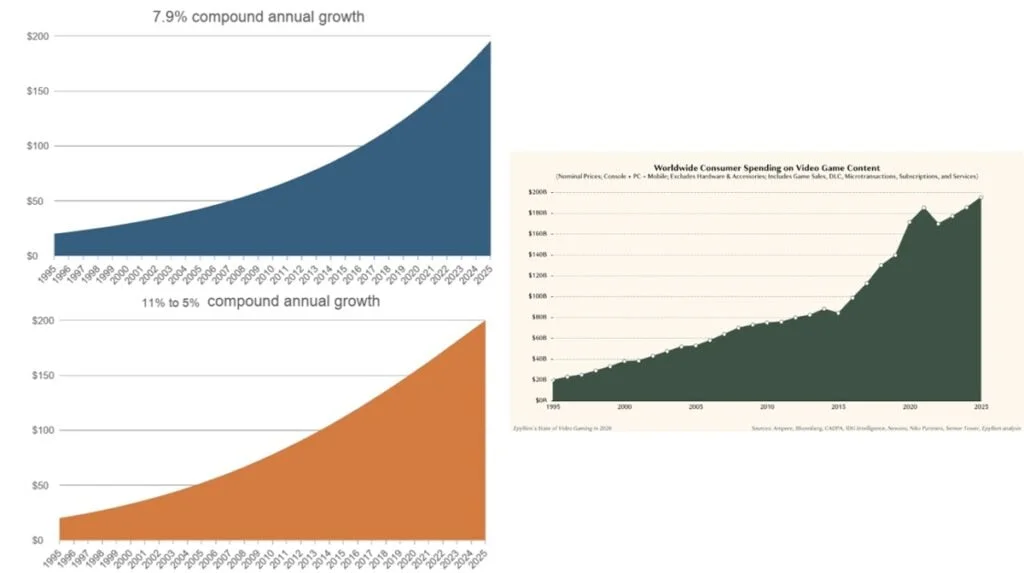
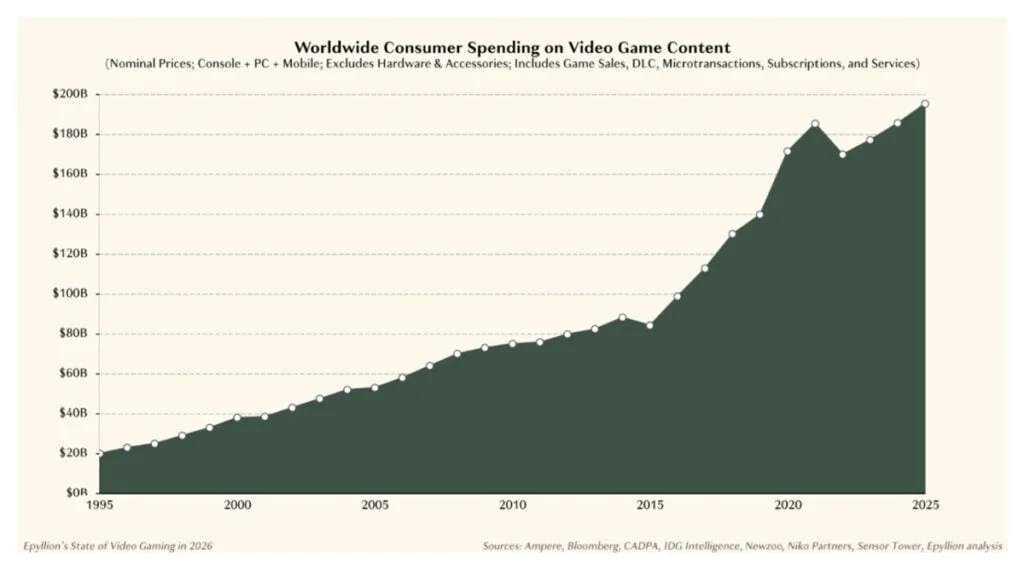
Fries’s case for optimism starts with a long view of revenue. He said global game revenue rose from roughly $20 billion to $200 billion over about 30 years, averaging around 8% annual growth. More recently, growth has been closer to 5% to 6%. The pandemic brought a temporary spike, but the market has since returned to its earlier trajectory, in his view.
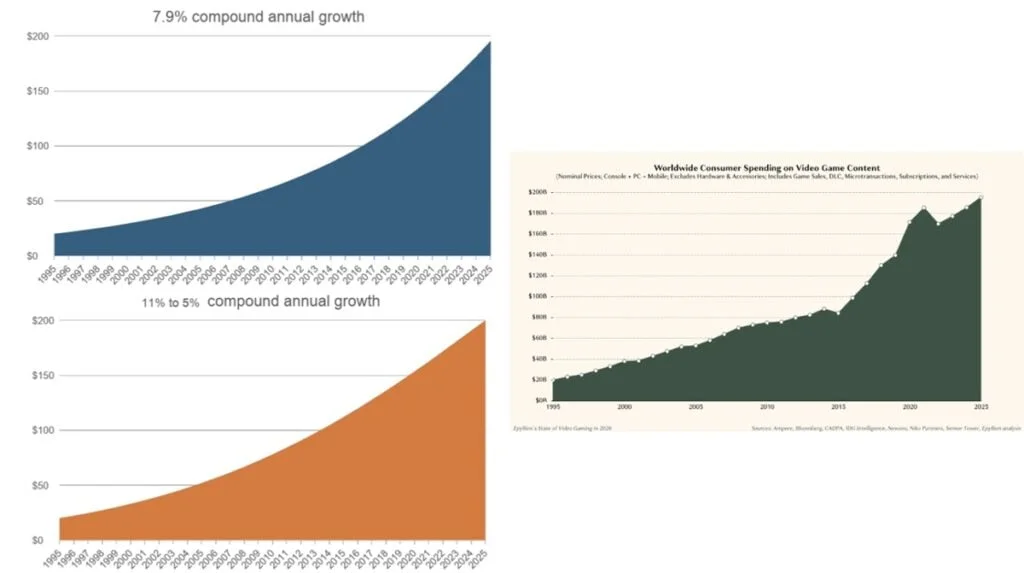
He pushed back on comparisons between current conditions and the 1984 industry crash. Looking at inflation adjusted figures, Fries said, the business has risen over three decades despite downturns along the way. “So we’ve had incredible growth in the game business. This is why I’m optimistic. We’re growing. We’re continuing to grow.”
That long term view doesn’t erase the sharp employment challenges Satvat sees. He estimated that game industry headcount grew by 100,000 to 150,000 between 2017 and 2022. From 2022 to 2026, after accounting for both layoffs and hiring, net growth was only about 3,000 to 4,000 jobs.
In other words, market revenue and job creation aren’t moving in lockstep. Satvat said growth is shifting toward regions beyond North America and Western Europe, where the industry has faced significant hardship. He estimated that China accounts for 30% to 40% of total game industry headcount and pointed to growth in Latin America, India and Eastern Europe as part of the broader shift.
“What it’s taking to produce that revenue and where it’s produced and the headcount and the types of firms and firm sizes that are producing that absolutely is shifting,” Satvat said. His point is less that the pressure has passed than that the global industry’s expansion is being carried by a changing mix of places and companies.
Open roles are moving beyond AAA
Satvat’s hiring data also suggests that the shape of opportunity is changing inside the industry. Triple A roles accounted for about half of tracked openings in 2022; their share has since fallen to around 30%. Total openings averaged higher this year than last, he said, but the improvement isn’t evenly distributed across regions.
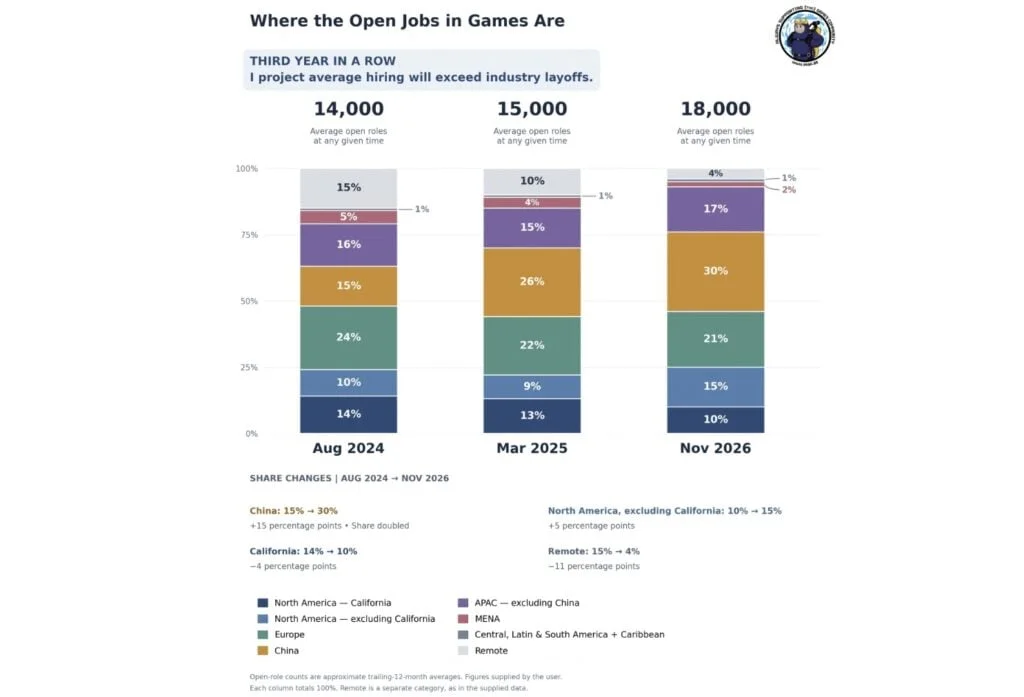
Remote work has narrowed sharply as well. Remote roles represented 25% of openings in 2022, compared with roughly 7% to 8% now. That contraction matters to job seekers who might once have looked beyond their home region, but Satvat cautioned that relocation is difficult even for people who are willing to move. The practical options depend on a person’s country and circumstances.
The number of people trying to enter the field adds another layer of pressure. Satvat described an “unprecedented explosion in people coming into the field” and estimated that game degree programs have increased tenfold over the past decade. At the same time, he put the number of open game design roles at about 850 at any given time, including 300 to 350 in the United States. Around 10,000 people graduate from game programs annually, with roughly half seeking design jobs.
That imbalance makes career flexibility a practical issue, not an abstract piece of advice. Fries spent a decade working on databases and spreadsheets before he could focus on games. Satvat was 38 when he got his first job in the game industry. About 60% of people who find work through ASGC.gg get jobs outside gaming.
“More than ever, people should be thinking about just any career that they can do with their skills, rather than just games,” Satvat said. He urged new entrants to build skills that can travel between sectors instead of assuming that a game industry role will anchor their entire career.
Smaller studios could widen the creative field
Both executives see room for smaller teams and lower budgets to shape what gets made. Fries argued that a leaner production model can make creative risks more affordable. Small teams, he added, can benefit from working closely together, while using AI tools for tasks that would otherwise require outsourcing.
Satvat sees accessible tools as a possible opening for studios that couldn’t compete under the budgets and staffing demands of traditional triple A production. He pointed to strong review scores as one indication that smaller developers can produce highly regarded games, while acknowledging that review scores don’t measure sales directly. He also said independent studios often need several projects before they find success.
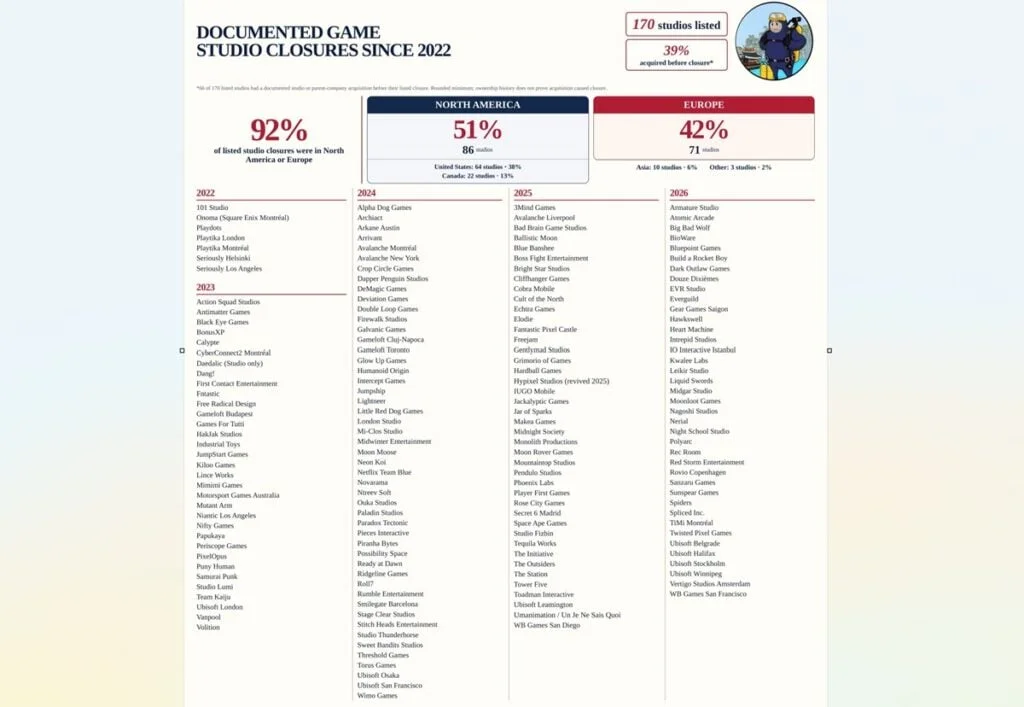
That opportunity comes amid closures: Satvat said 170 studios have shut down since 2022. So the case for smaller teams isn’t a claim that the business is easy. It’s that lower costs and different production structures may let some developers pursue projects that large studio models wouldn’t support.
Fries made a similar argument about AI and total consumer spending. He expects AI generated games to have little effect on the amount players spend. In his view, customers already have plenty of games to choose from, and when one title isn’t available, they can buy another. Adding thousands of AI generated releases might change the volume of supply without changing the market’s overall growth rate.
AI’s promise for studios comes with hiring risks
Satvat is less sanguine about the effect of AI on employment. He said employers have told him they plan to hire fewer early career workers and put more resources into tools. That creates a direct challenge for graduates trying to gain their first experience, even if the same tools eventually help smaller teams make games.
“I’m very concerned about the impact on early career employment,” Satvat said. He hopes AI enabled production could contribute to a larger independent studio base, but said he also has “a great deal of fear” about the consequences for work in gaming and beyond.
For Satvat, human judgment could become more valuable as generated content becomes easier to produce. He expects taste and design choices to help distinguish games from a growing volume of material made with automated tools. Fries’s prediction is that the tools won’t substantially change total game spending; Satvat’s concern is that they could change who gets hired and how projects are staffed.
Together, their views point to an industry with durable revenue growth and uneven access to the work behind it. Regional expansion and smaller studios may create new paths, while fewer remote roles, a crowded entry level market and AI driven staffing decisions narrow others. The useful signal for professionals is not simply whether gaming keeps growing, but which regions, teams and skills are positioned to turn that growth into work.
Fries also questioned whether a delayed blockbuster such as Grand Theft Auto VI would create a lasting lift in industry wide sales. Speaking before its November 19 release, he argued that players might shift spending from one game to another rather than increase their total spending. His broader read is that individual hits can reshape attention without changing the market’s long term direction.
For people building careers or studios, the takeaway is concrete: revenue growth alone won’t guarantee stable hiring or broad access to opportunity. Transferable skills, adaptable team structures and a clear creative point of view are likely to matter more as the industry’s workforce and production model continue to shift.


Discussion
Sign in to join the discussion.