D&D Beyond's latest update introduces collaborative editing for Player Journals, allowing players to share and enhance their campaign notes collectively.
Today marks a significant milestone in the evolution of D&D Beyond's Maps VTT, as collaborative player editing for Journals comes online. This feature enables players to edit, enhance, and maintain the Player Journal collectively, ensuring shared memories and campaign details stay organized and accurate. With this new capability, the role of journals within gaming campaigns could shift dramatically, allowing for more engaged players and enriched storytelling.
At a Glance: New Features in Journals
Collaborative Player Editing
Now, multiple players can collaborate on entries in the Player Journal, with the system locking an entry while it's edited to prevent clashes. This system not only fosters teamwork but also allows players to share their unique perspectives and insights in real-time. Imagine a session where every player’s viewpoint can color an event’s retelling—this aspect could revolutionize how stories are crafted within these campaigns.
A Shared Record
This tool allows all players to document notes together rather than relying solely on the DM or a single note-taker. That reliance can often lead to discrepancies and incomplete records, which can be detrimental to the consistency of storytelling. Now, everyone gets to contribute, resulting in a tapestry of memories that reflects the full spectrum of the campaign experiences.
Quick Notes During Play
By pressing J during the game, players can jot down quick notes without disrupting the game's momentum, or they can create more thorough entries directly in the Campaign Journal. This feature stands out as it recognizes that in a lively game session, thoughts can come and go like the flicker of a candle. Capturing those moments in real-time is key to maintaining narrative integrity.
Why Journals?
Campaigns are rich with narrative details that deserve to be recorded— from the innkeeper with a suspicious demeanor to pivotal agreements made during gameplay. Journals on D&D Beyond provide a canvas for these essential elements, ensuring they’re documented and not forgotten between sessions. Given the complexity of many campaigns, this record-keeping is an asset, providing a solid framework that players can return to throughout their adventure.
The gradual release of Journals over the summer aimed at simplifying note-taking during sessions, letting players efficiently capture important moments without breaking the flow of play. This shift reflects a broader trend in tabletop role-playing games toward enhancing player agency and collaborative storytelling, something that many players not only appreciate but demand.
Never Forget What Happened Last Time
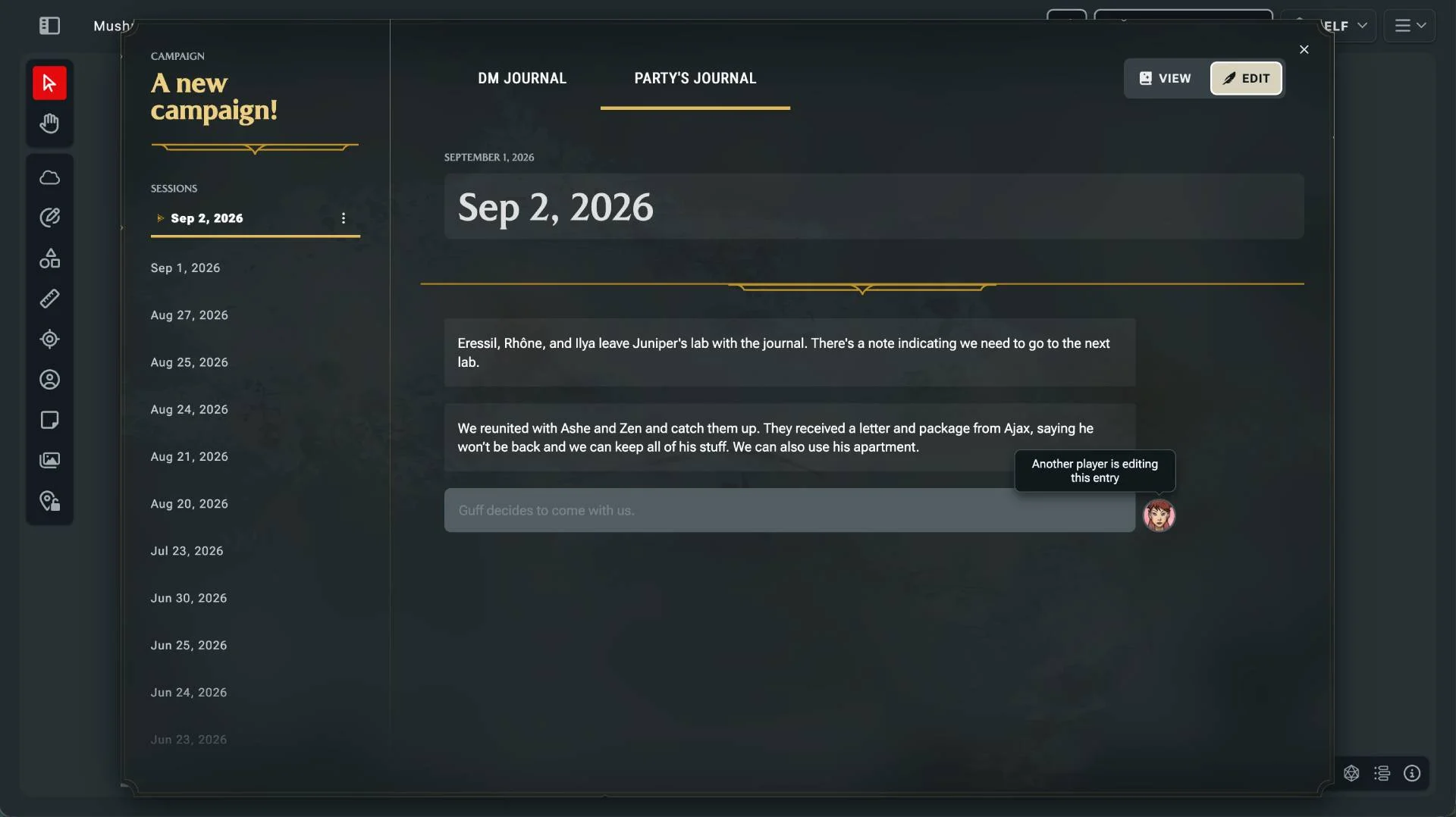
With the latest release, Journals offer:
- A dedicated DM Journal alongside a collaborative Player Journal
- Formatting options like headers, lists, colors, emphasis, and links
- An easy method to pen quick notes mid-game, or more detailed entries in the Campaign Journal
- Automatic headers for DM entries that feature map names for added context
- Access to the Player Journal even when the DM isn't using Maps
This collaborative approach alleviates the burden on a single player to keep track of the events and decisions made during sessions. Everyone is encouraged to contribute notes, reducing the chance of forgetting essential details. It's about democratizing storytelling and assuring that every player’s voice is represented and valued within the narrative.
How Player Editing Works
With today's introduction of player editing, if multiple users attempt to edit the same entry simultaneously, the system prevents overwriting. While one player is editing, others can see that the entry is currently locked and can switch to edit a different note until it's available again. This dynamic interaction prevents potential conflicts that might arise during live editing, thus preserving the integrity of each player's contributions.
Get Out There and Take Some Notes!
Journals are designed to maintain the flow of gameplay while ensuring nothing slips through the cracks. Quick note-taking allows for immediate documentation, while editing capabilities facilitate refinement later. With collaborative editing now in play, everyone has the tools needed to keep track of the story effectively. If you're working in this space—or even just looking to enhance your gaming experience—this new feature might be more significant than it looks.
Whether you're gearing up for the next session, trying to recall events from weeks ago, or clarifying past decisions, Journals are poised to support your campaign's continuity. (And this is the part most people overlook: without an effective system for note-taking, campaigns can easily lose direction.)
Future Implications
The introduction of collaborative player editing in Journals is more than just an added feature; it's a pivot toward a more inclusive form of gameplay. As players find themselves participating more actively in the documentation process, the traditional role of the DM may evolve. Instead of being the sole keeper of the story, DMs may find themselves facilitating discussions around the narrative that emerge from this shared record-keeping.
Looking ahead, this shift could encourage game developers to introduce even more interactive features that further enhance collaboration. Think about the potential for integrated multimedia elements or even voice recording options during sessions. Each addition could draw players deeper into the experience, strengthening community ties and extending campaigns' longevity.
The question is, will this movement catch on in other gaming systems? Given the wave of interest in cooperative and shared gaming experiences, it's certainly a possibility worth watching.



Discussion
Sign in to join the discussion.