Game Industry Leaders Warn Publishers Are Taking Fewer Creative Risks
Published Nov 06, 2026Reads 815By Dean Takahashi
Doug Bowser, Peter Moore and Shawn Layden say pressure for predictable returns is limiting creative risks, while AI and major releases may open new opportunities.
The sharpest concern from this GamesBeat Next 2026 panel wasn’t a new console rivalry. It was that the business is getting worse at backing the games that make people care about games in the first place. Former Nintendo of America president Doug Bowser, former Xbox, Sega and EA executive Peter Moore, and former Sony Interactive Entertainment Worldwide Studios chairman Shawn Layden argued that publishers have grown too focused on scale, efficiency and predictable returns—and that developers need room to take creative risks.
That criticism came from a panel of industry veterans, moderated by GamesBeat’s Dean Takahashi. Takahashi had seen a much more combative version of this gathering at E3 in 2001, when the leaders of Xbox, Sony and Nintendo traded barbs and never appeared together again. This time, the speakers had left those companies, and the conversation centered on a shared worry: financial measures are increasingly shaping game decisions, even when they say little about whether a game will be fun.
Layden sees consolidation creating companies that are “too big to fail” and less willing to experiment. Bowser’s concern is that publishers now place heavier financial pressure on fewer releases. Moore offered a vivid measure of how far expectations may have shifted: a game as unconventional as Sega’s Seaman, released for Dreamcast, would be hard to get approved today. The point isn’t that every odd idea deserves a green light. It’s that a business built around reliable returns can make room for fewer surprises.
Where the industry might find room to grow
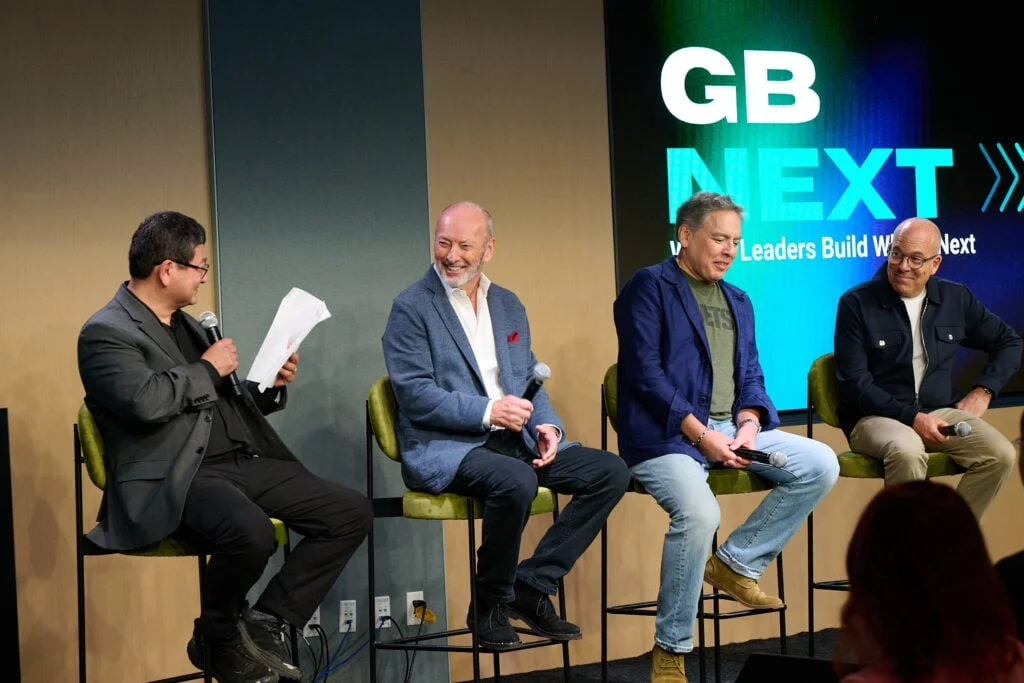
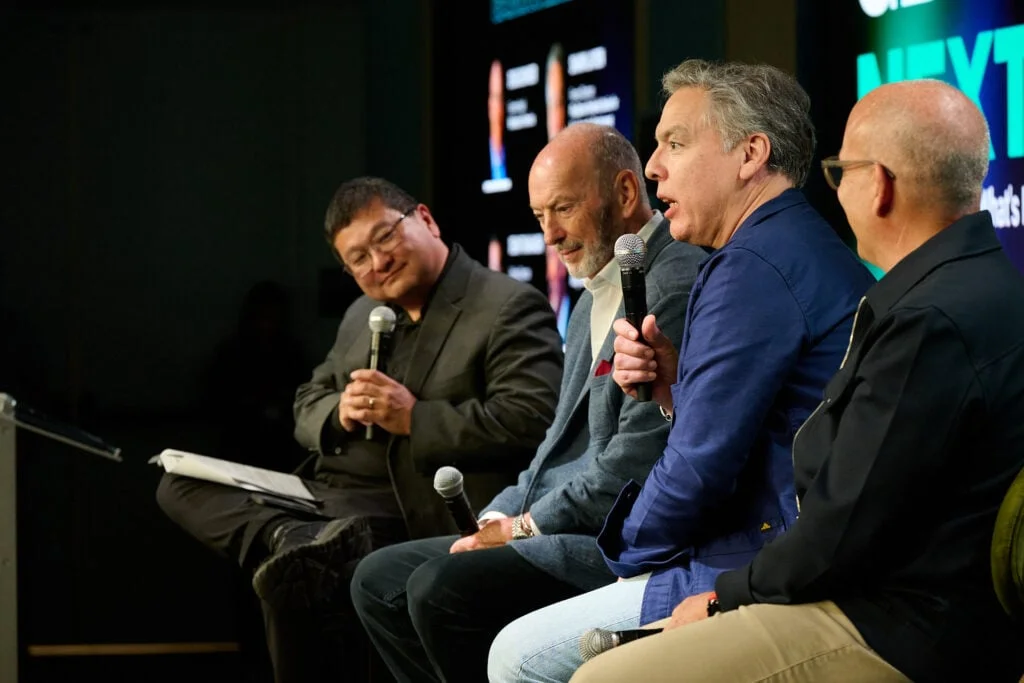
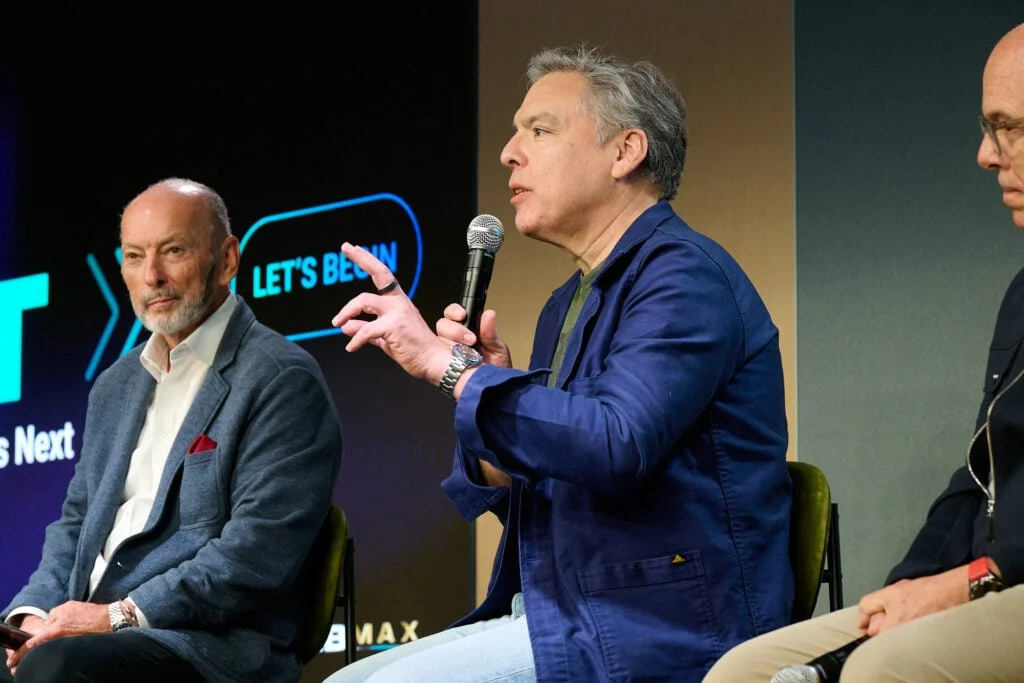
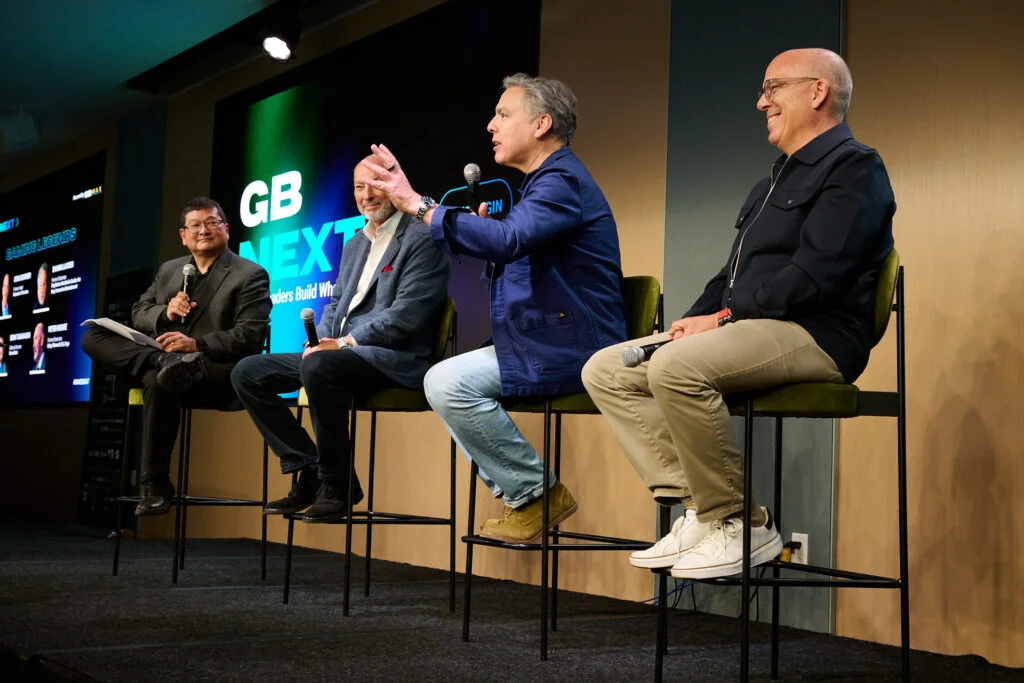
Dean Takahashi, Peter Moore, Shawn Layden, and Doug Bowser. Source: Mark Madeo/GamesBeat
Bowser sees AI as one way to lower the cost of making games, especially for independent and double-A studios. His case is about access: smaller teams could use the technology to tackle work that has traditionally favored publishers with larger budgets. That’s a plausible opportunity, though the panel’s comments don’t establish how much AI will reduce costs or which development barriers it can actually remove.
Moore expects GTA VI to lift the wider market. He and Bowser suggested that its release could bring lapsed players back, draw new attention to gaming, and help sell hardware. The reasoning is that a major hit can expand interest in the medium instead of simply taking sales from competing games. Whether that lift reaches beyond the blockbuster itself remains to be seen.
Moore also thinks platform exclusivity matters less than it once did. Microsoft’s acquisition of Activision Blizzard, he argued, changed the equation: some franchises have become too valuable to confine to one platform. The industry’s ownership deals may now matter as much as its hardware rivalries in determining where players can find major games.
Risk, creativity and the Nintendo exception
Bowser described Nintendo as an outlier because it develops hardware and software together and, in his view, can therefore keep development costs lower than Sony and Microsoft. That model helps explain why Nintendo may have more room to make decisions on different terms. It also makes the comparison difficult: the panel didn’t provide figures to show how large that cost difference is.
Across the discussion, the former executives returned to one prescription: give creators more authority and trust their understanding of what players enjoy. That’s a harder principle to put into practice than to endorse. Publishers still have budgets to manage, but when financial gates narrow the range of games that get made, they can also narrow the range of reasons people have to play.
The mood was strikingly collegial for a gathering of former console leaders. There were few shots at one another; the sharper criticism was aimed at an industry they believe has become too cautious. Moore did offer one stray bit of panel humor, saying “time to penis.”
What follows is an edited transcript of the panel. Photos are by Mark Madeo.
Dean Takahashi, Peter Moore, Shawn Layden, and Doug Bowser. Source: Mark Madeo/GamesBeat
Peter Moore: I’ve always wanted to walk out to Linkin Park.
GamesBeat: Let’s go back to the 2001 panel with Robbie Bach, Kaz Hirai and Peter Main. Hirai, the Sony veteran, told Bach, “Follow our lead. Follow our lead.” At the time, Sony had earned that confidence. The panel never happened again.
We’ve brought together a different trio to revive some of that openness at a moment when the industry could use it. These three aren’t representing the console companies they once led, and they weren’t all rivals at the same time; some even worked together. So this feels more like a conversation among old friends than a new round of console warfare.
There’s common ground, too. As Moore put it: “You know, things break.”
Moore: That was 20 years ago! And for those of you who don’t recall, he’s referencing the Red Ring of Death.
GamesBeat: Let’s hear the backgrounds that shape how each of you sees the industry.
Moore: I was born a thousand years ago in Liverpool, England. It’s a pleasure to be here with so many familiar faces. With E3 gone, Dean has done a great job bringing the industry together. It’s wonderful to be here with old friends, foes and colleagues like Shawn and Doug.
I came to games late. Before Sega, I was a “shoe dog” at Reebok, caught up in the sneaker wars. Sega asked me to join the console wars, and I knew nothing about video games. I moved back to San Francisco, to 650 Townsend, and became president of Sega. Bernie Stolar was there when I arrived, though he was gone not long afterward. It was a battlefield promotion.
We launched on 9/9/99. Those were great years. We took games where gaming was going and went head to head with Sony, then led by Kaz Hirai and Andrew House. Later, Microsoft recruited me to Seattle. Steve Ballmer told me, “We need somebody who can throw punches.” Xbox saw itself as competing with PlayStation and somehow forgot Nintendo was about to arrive with the Wii. I spent five years at Microsoft.
Then John Riccitiello called. EA needed a sports and video game person to lead EA Sports. I moved back to Redwood City and spent a brilliant 10 years there as chief operating officer.
That period saw the industry shift from physical media to direct-to-consumer sales and digital distribution. I also got a call about moving back to the UK. Looking out at a glorious California day, I said, “Hell no.” Then Spencer Stuart in London asked if I’d become CEO of Liverpool Football Club. I’m a born-and-bred Liverpudlian; my dad took me to my first game in 1959. It was hard to say no.
I left games for three and a half wonderful years. My wife, Debbie, is here. We moved back to Liverpool and won everything. I applied a lot of what I’d learned in video games to running a global football club. Since then I’ve been involved in football and games again. Dean and I go back to Industry Standard, Red Herring, the San Jose Mercury-News and the Wall Street Journal, when he was just a kid. It’s wonderful to see him bring people together for this event.
Shawn Layden at GamesBeat Next 2026’s opening keynote panel. Source: GamesBeat/Mark Madeo
Shawn Layden: I’m honored to be up here with Bowser and the Scouser. As an Arsenal supporter, I won’t take too many shots at Liverpool. Go Gunners.
I joined Sony shortly after it invented the compact disc, then spent time in Tokyo. I joined the young PlayStation group in 1995, working to bring Western games to Japan. That was like carrying coal to Newcastle: trying to introduce something like Twisted Metal to a country accustomed to beautiful games such as Final Fantasy. It was a hard slog.
Around 2000, I moved to London to oversee international development. Sony had bought Psygnosis, a major European company, and we had to integrate it. You walk around with a clipboard and people call you the Grim Reaper. It isn’t much fun, but consolidation has been part of this industry for a long time. We can talk about what it means now.
I returned to the US and worked at Sony Network Entertainment before becoming CEO of PlayStation in the States. Later I chaired the studios. After 10 dark years in sales and marketing, getting back to game development was a delight. I left Sony about seven years ago, just before COVID—good timing on my part.
I’m here to talk about an industry we love and have given our lives to, one that provides a livelihood for so many. It’s in a difficult place right now. We can say more about that later.
Doug Bowser: I’d challenge the name of this panel. I see many more legends in the audience. It’s great to be here for an important conversation.
Like Peter, I came to games mid-career. Before that, I spent 23 years selling something better than shoes: toilet paper. I worked at Procter & Gamble during the toilet paper wars with Kimberly-Clark and Northern. I can tell you more than you’d ever want to know about one-ply, two-ply and three-ply.
Procter was a good place to sharpen my skills. Its sales, marketing and development programs gave me the chance to work in the US, live in Hong Kong and help expand into China. I spent six years in Mexico and Caracas, Venezuela, working on Latin American expansion. I learned how to grow global brands and gained an international perspective.
When Cincinnati suggested my tenth move in 23 years should be to Cincinnati, Ohio, I said, “Hell no.” With respect to anyone from Cincinnati. I contacted a few headhunters, and the first call was about EA. At the time I was playing Tiger Woods PGA Tour Golf with my son and was addicted to SSX Tricky on PS2. The job felt like a chance to bring my experience to an industry I loved and had been part of for as long as I could remember.
I spent eight years at EA in sales and marketing. In my last couple of years, I worked for Mr. Moore.
Moore: To my face.
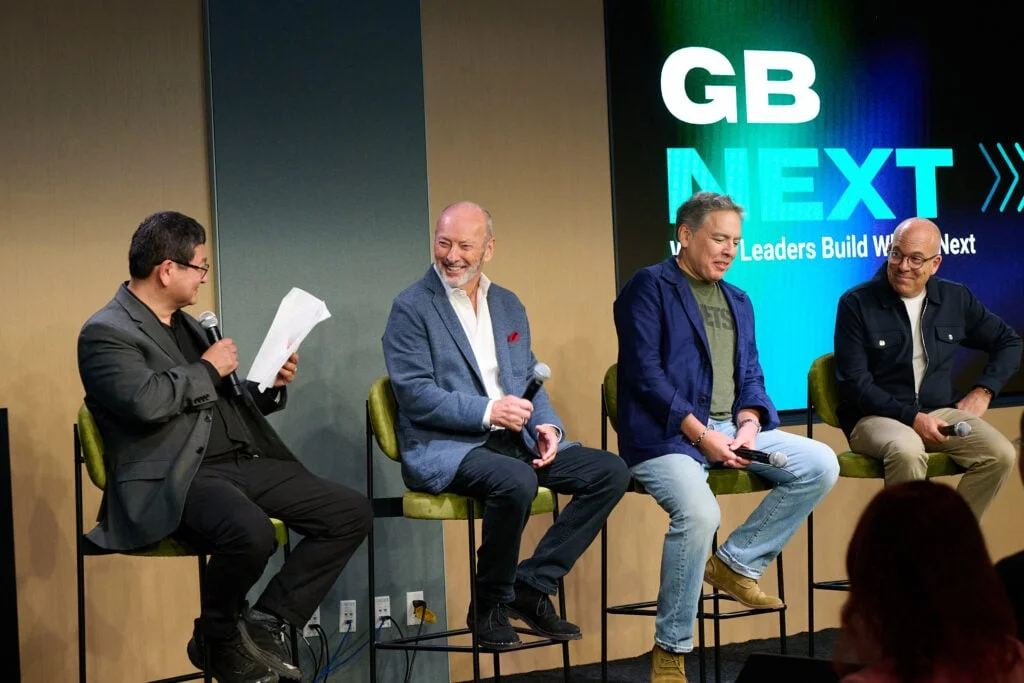
Dean Takahashi, Peter Moore, Shawn Layden, and Doug Bowser. Source: Mark Madeo/GamesBeat
Bowser: We had a great relationship. Those were fun times. The second time I said “Hell no” was when a headhunter asked whether I’d consider Nintendo. It was three years into the Wii U, and I was forecasting the business for Peter. We were killing every title on the Wii U. I thought the company was a sinking ship.
Then I stepped back and thought about it. Nintendo had never been afraid to take risks or try something different. When others zig, it zags. I started to appreciate what the company was doing. I called the recruiter and asked, “Is it too late to say hell yes?” The rest is history.
I’m still bullish on the industry, even after what’s happened. Dean and I were talking about this earlier: we’ve been through cycles like this before. This one feels longer and has more forces shaping it. But in a $250 billion industry that’s growing, there’s a huge opportunity ahead.
We need to work through this period, understand what caused it and decide how to respond. Some causes are within our control; others aren’t. Games are a major part of people’s lives, and I believe they’ll stay that way.
Moments, memories and history
GamesBeat: Let’s think about the industry through its defining moments, memories and history. A moment passes; a memory or part of history lasts. What’s a moment when you felt you were part of something significant? Doug, let’s start with you.
Bowser: That’s an easy one. Most of my time in my last role fell in the Nintendo Switch era. I still remember the first time I saw the Switch and held it. It felt revolutionary: Nintendo was bringing its handheld and console platforms together, letting us focus our game development talent and capabilities on one device. I thought things were heading in the right direction.
There was still a big unknown: how would consumers respond? Everyone was talking about teraflops. Ray tracing wasn’t quite part of the conversation yet, but it arrived soon after. The Switch didn’t have some of those capabilities, and I wondered how buyers would react.
The answer started to feel real at our first launch event in January, when people got to play the games. I’ve always believed the experience on screen matters more than what’s under the hood. What counts is what you feel when you see a game, pick up a controller and play it yourself.
I saw that reaction again at launch. People lined up around the block outside our New York store, past Rockefeller Center and beyond. Some came through the doors with tears in their eyes. You don’t get to witness that kind of excitement and fandom often.
GamesBeat: Shawn, did you cry when you saw the Switch?
Layden: I was speechless.
Shawn Layden was speechless when he saw the Nintendo Switch. Source: GamesBeat/Mark Madeo
GamesBeat: What about you? A moment or memory?
Layden: I’ll take a moment of privilege. My favorite memory from a long time at PlayStation spans the PS1 and PS2 years, the PS3 story—when Sony flew too close to the sun like Icarus and nearly destroyed itself—and the PS4 redemption arc for the console business.
PlayStation’s peak E3 moment
The 2016 PlayStation show at E3 was built around a simple insight: the venue should shape the performance. With the usual sports arena unavailable, the team moved to Los Angeles’ Shrine Auditorium, an old hall with a history of hosting the Oscars. They leaned into its age, filling the orchestra pit and bringing in composer Bear McCreary to conduct a score the audience hadn’t heard before. A singer flew in from Iceland to perform the vocal theme for the still-unannounced *God of War*.
Cory Barlog prepared to run the demo live from the balcony. The tension was obvious; one witness remembers him sweating so much that the team worried he might electrocute himself through the controller. Then the curtains opened. Kratos appeared, said, “Boy, I’m hungry,” and the room erupted. For the speaker recounting it, the orchestra and the live demo made this the finest experience of his career. His advice to anyone offered a chance to walk onstage with a live orchestra: take it.
That show packed in more than *God of War*. PlayStation also discussed *Spider-Man*, brought back *Crash Bandicoot*, and had Hideo Kojima descend the Michael Jackson staircase to “Take Me Back.” It was E3 spectacle at full volume.
The *Crash Bandicoot* shirt, though, belonged to another event. Shawn Layden says he wore it before anything had been approved, prompting calls from Activision accusing him of trolling the company. Activision made the game afterward, and the story ended happily.
When online play still felt new
Peter Moore’s defining memory comes from a much earlier kind of spectacle: two teams managing to play each other over a dial-up connection. In spring 1999, at 650 Townsend in San Francisco, Moore and colleagues were trying to connect a team there with Visual Concepts in San Rafael for a head-to-head game of *Sega Sports NBA 2K*. The connection ran over 56K dial-up, and the game held a smooth 30 frames per second. For Moore, hearing a colleague’s voice while watching the teams play from roughly 30 miles apart made the future feel tangible.
[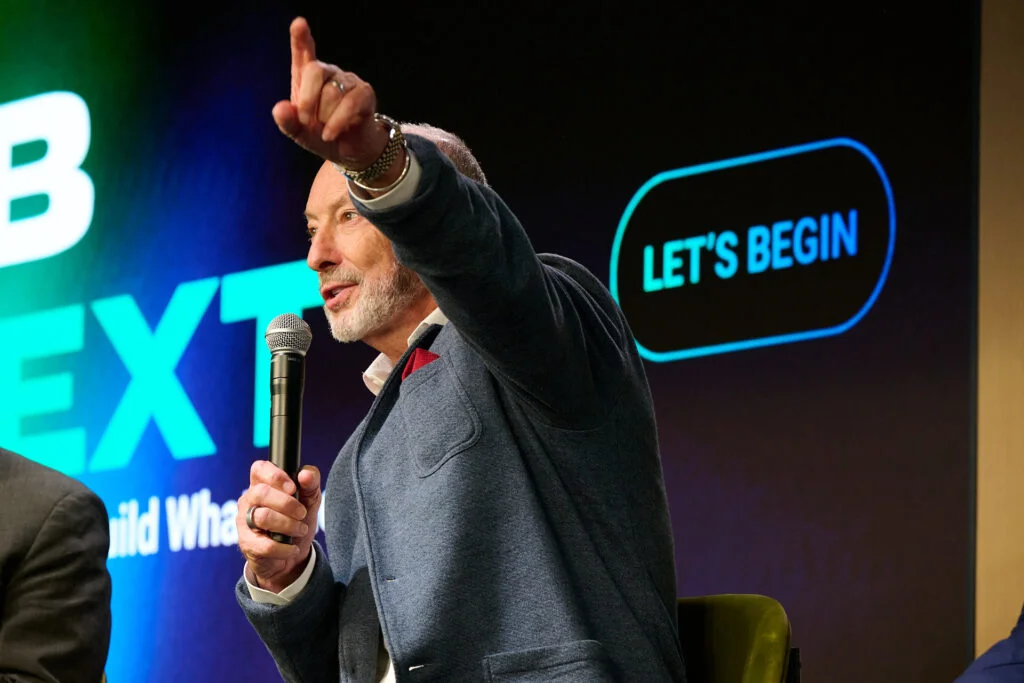]( /articles/312/iVwA484rD9VdDgaLqKeeIjPwZQDbL9cI.webp)
*Peter Moore is the only game leader to work at the top of Sega, Xbox and Electronic Arts. Source: GamesBeat/Mark Madeo*
The name *NBA 2K* came about because the team couldn’t settle on anything else while the Y2K scare dominated the news. Take-Two later bought Sega Sports and its intellectual property. Moore remembers the online test as a turning point: the start of the routine millions now take for granted—sign in, connect, play.
Why GTA matters to everyone
Doug Bowser was asked about *GTA VI* despite Nintendo lacking a platform that can run it. He’s excited for the launch, which he thinks could be the biggest the industry has seen, and hopes it sells hardware and gets people back onto devices they already own. He also expects the excitement to spill beyond Rockstar’s game: players may return to unfinished titles or rediscover older favorites. Bowser still makes time for *Ocarina of Time*.
His view is straightforward: a huge release can lift the industry as a whole. He doesn’t buy the idea that *GTA VI* will cast a “blast radius” over every other game. A launch on the same day could face a tougher fight, he concedes, but the broader surge in attention may bring more people back to gaming.
[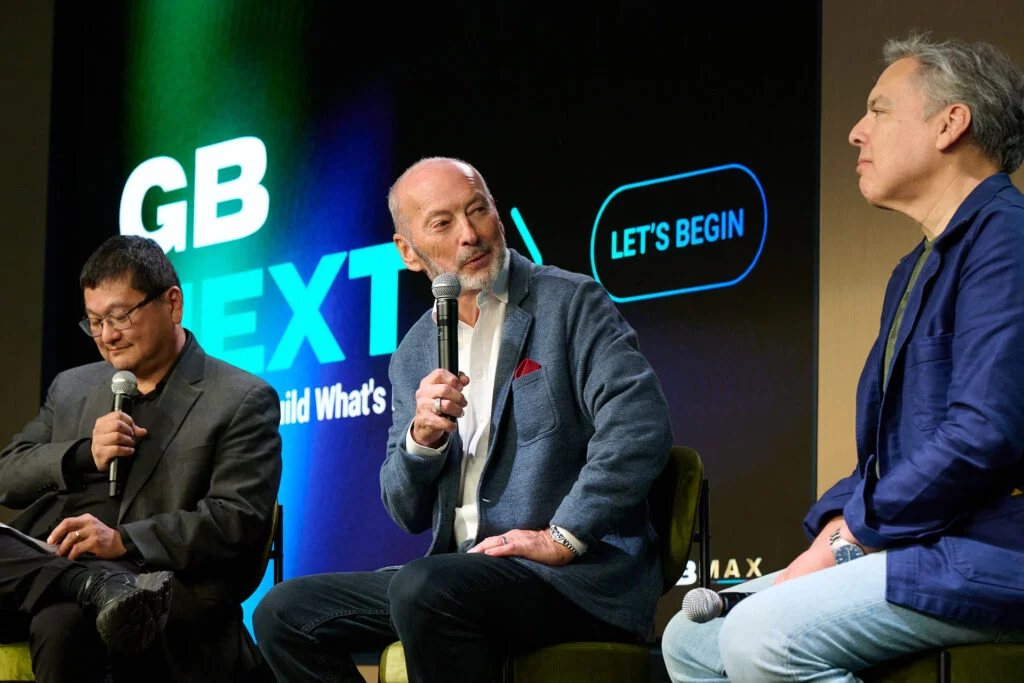]( /articles/312/8ymQBC7SQaXsmRWBdwhdipKO97kZy7e0.webp)
*Peter Moore tosses a joke at Doug Bowser. Source: GamesBeat/Mark Madeo*
Moore agrees that major releases can put games back in public conversation. He recalls taking *Grand Theft Auto III* to Sega’s nine studios in Japan as an example of where the medium was headed: 3D graphics, better sound, and a quickly globalizing business. The series moved from *Vice City*—after the industry’s “Hot Coffee” controversy—to *GTA IV*, which Moore says he proudly had tattooed on his bicep.
Now, with *GTA V* released 13 years ago, Moore expects *GTA VI* to generate the kind of attention once associated with *Call of Duty* launches and, during his time at EA, *FIFA*. He points to the jokes about employees preparing notes for their bosses to explain a week away from work. The long life of *GTA V*, he argues, also showed what sustained updates and new ways to engage players can do. Moore says the next game is arriving at a good moment for the industry.
Big companies, smaller risks
The panel’s discussion of layoffs and studio closures quickly turned to consolidation. Shawn Layden argues that large companies are becoming too cautious to innovate: they keep repeating proven formulas because the same audiences continue to pay for them. The result, he says, is a huge business with limited reach beyond people who already play.
Layden puts the tension in social terms. Gaming is a $250 billion business, but its cultural footprint still falls short of music’s: the people in a restaurant may all have a favorite song, while perhaps only five or six in ten have a favorite game. Keep producing the same titles, he says, and the people who skipped *Call of Duty* last year are unlikely to show up for it next year. He blames corporate priorities that put shareholder value and efficiency ahead of the creative work an entertainment business depends on.
Bowser shares the concern. When fewer games carry more financial weight, companies become less willing to take chances, and consumers get a narrower catalog. He says the industry needs to reach people who don’t spend all their time on the same two or three games. For independent developers, he sees an opening: AI tools can help small teams with code and other work, while their size lets them change direction quickly. As doors close for some large productions, Bowser sees room for AA and independent studios to make distinctive games.
Moore is more guarded about what tools can accomplish. You can’t spreadsheet your way to *Grand Theft Auto*, *Minecraft* or *Roblox*, he says. AI will become a useful tool, and he recalls EA using earlier forms of it for rendering and filling out game environments. Layden adds that Liquid AI came out of EA; Moore jokes that he can’t remember whether the current term is “super-I” or “super intelligence.”
Was Seaman thinking?
Moore’s examples of Sega’s stranger games make the argument for creative risk more vivid. He remembers *Samba de Amigo*, *Seaman*, and *Sega Bass Fishing*. His son, now 40, would hush him while playing the fishing game, warning that any noise might scare off the fish. Moore was delighted to see *Crazy Taxi* return with a new life.
That nostalgia sits alongside a harder question about budgets. Moore launched Xbox 360 with *Gears of War* during the release of Unreal Engine 3. He cites reports that the upcoming *Gears of War: E-Day* cost $500 million and sold 400,000 copies, while acknowledging that he doesn’t know whether those figures are accurate. His point is that the industry should consider spending a fraction of that kind of budget on new intellectual property—perhaps $20 million, $30 million or $40 million—instead of pouring vast sums into a 20-year-old franchise.
Moore says EA often struggled to launch new properties. Vince Zampella was one of the people who could push a new idea through: he built Respawn, helped bring *Titanfall* to market, and later followed it with *Apex Legends*. Moore remembers Zampella insisting the company fund the work and get out of the way, despite objections from Larry Probst, John Riccitiello and Moore himself.
For Moore, the answer to anxiety about AI isn’t to reject the technology. He expects developers to adopt it, while putting more attention back on creative work and less on cost cutting. He also points to Nintendo’s habit of following its own course, and says Xbox could look very different over the next decade. He sees potential in mobile gaming’s accessibility and wonders what the iPhone Duo might become as a gaming device, though he quips that it first needs to stop breaking. He remains bullish on Xbox and its resources, and says the company still cares about the brand.
AI can’t answer “Where’s the fun?”
Moore’s answer to where the fun will come from is blunt: AI won’t invent it. People will. At EA, he recalls, executive JR would keep asking, “Where’s the fun?” A game could look stunning and feature remarkable characters, but if it failed that test, it might never ship. Moore says EA shelved hundreds of millions of dollars’ worth of development because the fun wasn’t there.
Layden remembers a time when producers had to present games to colleagues in monthly reviews and take criticism in real time. Those sessions toughened developers up, he says, but the questions gradually changed. Instead of asking whether a game was fun, executives led with its total addressable market, daily active users and average revenue per paying user. Financial measures took priority, squeezing out creative judgment.
Bowser says the industry accepted that shift in its key performance indicators and now needs to push back. Nintendo gives its teams a simpler test: its mission is “We create smiles.” Bowser says that goal is easy to understand and can be applied while a game is being made or reviewed.
Fun is still the hardest thing to measure
Shinya Takahashi’s playtesting method was strikingly simple: put enough people in the room to see their faces, then watch them. He paid attention to their eyes and expressions, not their hands or the screen. If someone didn’t look like they were having fun, he asked why.
That’s a useful reminder for game makers. Player behavior can tell you what someone did; a face can show whether the experience is landing. Neither is a complete answer, but Takahashi’s direct question made the gap between intention and enjoyment hard to ignore.
The next audience won’t necessarily respond to the same assumptions. Gen Z and Gen Alpha players have grown up with games such as Roblox, Minecraft and Fortnite, where self-expression and easy access to fun matter. If you’re building for them, familiarity with older hits won’t be enough. Their preferences will shape the industry’s largest player cohort within a few years.
Doug Bowser holds us spellbound. Source: GamesBeat/Mark Madeo
Peter Moore offered a different lesson from a podcast about Seinfeld. The show became a $7 billion business despite having gone unfilmed for 30 years. Early on, Jerry Seinfeld and Larry David faced a tough sell at NBC. They presented scripts to executives including GE’s Jack Welch and NBC’s Brandon Tartikoff, while advertising sales teams used those scripts to pitch sponsors such as Ford, Pepsi and McDonald’s.
The writers listened to feedback, then made the comedy they believed in. Moore’s point is that creative conviction can matter as much as market input: Seinfeld’s humor seemed baffling to some viewers at first, but it broke from the conventions of American sitcoms. He recommends the Acquired episode as a long, deeply researched account of the business behind the show. It’s a useful listen for anyone trying to understand how enduring brands take shape.
Reeling Peter back into games
Some side-eye? Source: GamesBeat/Mark Madeo
GamesBeat: That’s good, Peter, but I have to pull you back into games here.
Moore: I tried to cross-reference! It’s an intelligent crowd, Dean, that can see the juxtaposition.
GamesBeat: How do you feel about exclusives versus cross-platform games? And what should the role of the platforms be?
Moore: Nintendo has no cross-platform games, so that’s easy.
Layden: Exclusives have long helped define a platform. PlayStation’s turning point came when Squaresoft moved Final Fantasy VII from Nintendo to Sony’s console. Sony’s own games, from God of War to Twisted Metal and Jet Moto, were exclusive too. Before leaving, Layden counted roughly 220 distinct Sony-owned properties across generations, including entries such as NHL 97 and NHL 98. Players needed a PlayStation to play them.
Are exclusives obsolete?
Layden described PlayStation’s platform role as different from Nintendo’s or Sega’s. Sony didn’t have an obvious mascot on the scale of Mario or Sonic, so it focused on bringing third-party games to PlayStation and creating new ideas. Even at its strongest, Worldwide Studios accounted for only about 21% or 22% of the market, he said. The goal wasn’t to take sales from EA or Activision; it was to grow the audience. Parappa the Rapper, with its rapping dog and onion friend, was an example of a strange idea that helped create a new rhythm-action genre.
Moore sees the economics of platforms changing. When he entered the business, the model was straightforward: sell consoles, build an installed base, then sell enough games—about 12 over a console’s lifetime, by his recollection—along with peripherals. Subscriptions, Game Pass, downloadable content and microtransactions have made the business harder to parse.
He questions whether huge first-party exclusives will remain common, especially as Microsoft weighs its future in hardware. Moore imagines a future where players use a controller and television to stream games as easily as they choose a Netflix film, with no noticeable lag. That future is uncertain, but console hardware already carries heavy costs: Moore recalled the original Xbox costing $175 to sell, and described the Xbox 360’s development, marketing and Red Ring of Death costs as enormous.
Doug Bowser was not part of the console arms race. Source: GamesBeat/Mark Madeo
The Activision Blizzard acquisition has made the meaning of “first party” and “exclusive” harder to pin down. Moore argued that Microsoft would undermine a roughly $75 billion Call of Duty purchase by keeping the series off PlayStation. He sees exclusivity weakening as the industry opens access across platforms, and expects the next five years to show how that shift develops.
GamesBeat: What’s it like to not be part of the arms race Peter just described?
Staying out of the console war
Bowser: It’s a strange position. I’m competitive, and there were times I’d read about the console wars and see only Sony and Microsoft mentioned—even while Nintendo was selling 150 million units. But Nintendo also chose to operate in its own space rather than get pulled into that contest.
Bowser’s answer was less absolute than Moore’s forecast. The case for an exclusive depends on the publisher’s costs, whether the game can turn a profit, and how much it can help sell hardware. He recalled lengthy discussions with Phil Spencer about Call of Duty: Spencer’s logic was that Microsoft needed to recoup its investment, so keeping the series on PlayStation would make little sense—and bringing it to Nintendo Switch made sense too. Microsoft has ultimately brought it to Switch.
That’s the tension at the heart of the debate. Exclusives can give a platform identity, but blockbuster acquisitions and rising development costs can make broad distribution the more rational business choice. Whether the console itself remains central is still an open question.



Discussion
Sign in to join the discussion.