Bill Jemas is launching card games inspired by 1940s Superman cartoons, pairing quick play with historical themes and Creative Commons artwork.
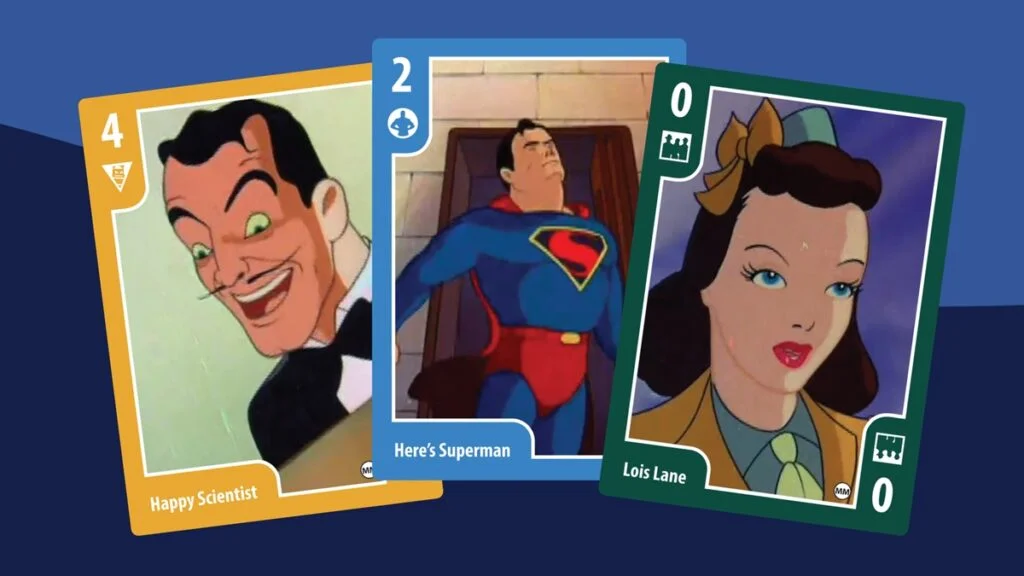
Bill Jemas is bringing his trading card experience back to the table with a new company and a design premise built around public domain material. True Justice For All plans to turn the 1940s Fleischer Studios Superman animated shorts into a shared setting for card games, new stories and commissioned artwork. Its first campaign is scheduled to launch on Kickstarter November 19.
The project’s pitch is both playable and editorial: games should move quickly, while the cards carry information and themes the team considers worth discussing. The opening titles, My First Monster and America First, use the old cartoons as a starting point for distinct kinds of play and storytelling. Jemas says the games are meant to make positive messages part of the experience without sacrificing pace.
A new life for the Fleischer shorts
Fleischer Studios made 17 Superman animated shorts in the 1940s. Their copyrights expired after renewal deadlines passed in the 1960s, according to Jemas, putting those original films in the public domain. True Justice says it will use frames from the shorts, and describes its broader creative setting as the copyright-free Superman Universe, or ©-FSU.
That distinction matters. The company says it has no rights associated with DC Comics and is not claiming ownership of the wider Superman property. Its stated reference is to the public domain cartoons, using the phrase “powered by Superman Animated Shorts.” The line between a specific set of historical works and a familiar character with a long commercial history will shape how the project presents itself.
Jemas sees the old material as an invitation for new creators. True Justice is commissioning writers and artists to make stories and art set in the same universe as the shorts, and says it will release that work under a Creative Commons license. He compares the opportunity to later interpretations of older stories, citing The Wiz and Wicked as works drawn from L. Frank Baum’s books, and Christopher Nolan’s Odyssey as a new take on Homer.
“We would like to do something like that with the universe established by those fantastic Superman shorts,” Jemas said. He described the original films as “lush, cinematic, and years ahead of their time,” and argues that their visual style still feels contemporary. The company’s ambition is to build a setting incrementally, with each game adding cards, characters and stories.
Fast play, with room for strategy
The games use Jemas’ Supersets System, which is designed to work across different titles. Players can combine cards from any Supersets game, while the basic rules are intended to be learnable in a few minutes. In the core format, each player lays cards out in a grid, then uses powers and perils to challenge the opposing arrangement. A party version is also planned.
Jemas describes the games as family friendly and quick to play: a session should last about 15 to 20 minutes after a three to five minute introduction. The company says the system still offers many decisions within that short window. That combination—easy entry, fast rounds and reusable cards—will be central to whether the games can appeal beyond players already interested in collectible card games.
My First Monster draws on “Mechanical Monsters,” the Superman cartoon that first introduced a monster to the animated series, according to Jemas. A virtual version of the starter deck is available to play for free. Printed starter decks are scheduled for release next summer.
America First takes a more explicitly historical route. It is based on the Fleischer short Destruction, Inc., released in December 1942, and focuses on sabotage at an American munitions plant. Twelve special cards are intended to present historical information about prominent figures in the prewar Nazi movement in the United States and the private citizens who opposed them.
Jemas points to a gap in the original cartoon’s portrayal: its saboteurs work for an unnamed source of money, rather than being linked to the broader pro-Nazi movement operating in the country before the war. “It is telling,” he said, that the film framed the threat that way. The card game uses that difference between the cartoon’s plot and its historical setting as a basis for its added context.
From Fleer to True Justice
Jemas’ return to cards draws on a career that began at Fleer, then a Marvel subsidiary. In the 1990s, he helped establish an entertainment card division and worked on products including Fleer Ultra X-Men, Marvel Cards Spider-Man, Marvel Masterpieces, Fleer’s Marvel Flair and Marvel Metal. He also helped design the OverPower trading card game.
He later became Marvel president. Looking back on that period, Jemas said his team opened the Marvel universe to writers and artists who had been excluded or overlooked, then gave them creative freedom and marketing support. He called the approach a “curated creative commons,” an idea that now echoes in True Justice’s plan to release new creative work under a Creative Commons license.
The new company has been bootstrapped and has about a dozen people, Jemas said. He began developing card games again after connecting with people interested in “games for good,” including games with positive messaging and environmental themes. Along the way, the team learned that the Fleischer Superman shorts were in the public domain and began testing a game built around them.
True Justice is one of several groups working with the Supersets System. Jemas also named Another Door Comics, which is developing The Boy in the Bot; Mythik Entertainment, which is working with the Hindu pantheon; and Chirp Up, which has six starter decks featuring bird art and photography. Chirp Up has two free virtual games, and printed decks are expected through DCBS in December.
Digital play before the printed decks
True Justice is using a free online game to introduce its first starter deck ahead of the planned physical release. Players can try the virtual version of My First Monster at justiceforallgame.com. The company’s site is True Justice For All.
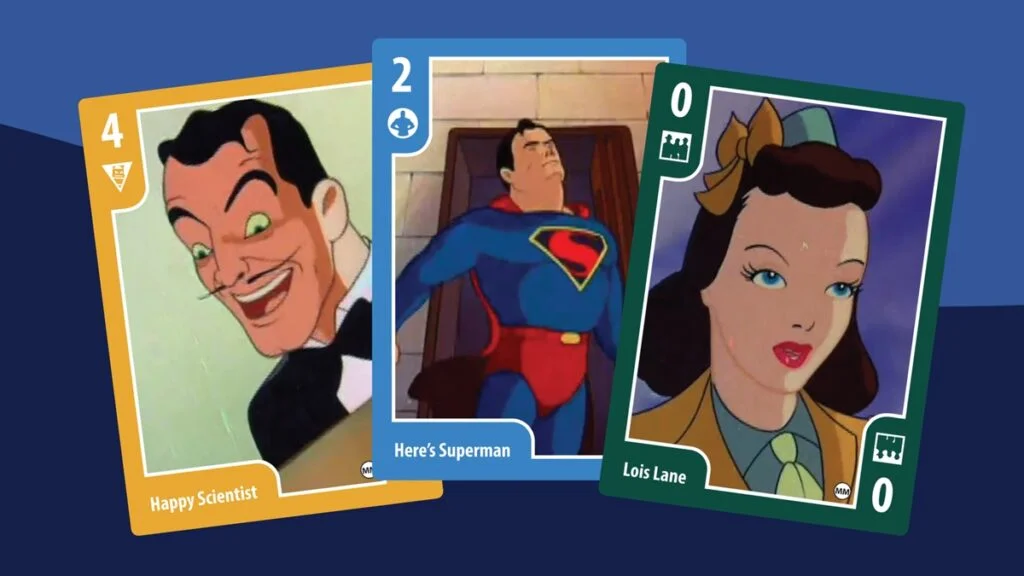
The test will give prospective players a chance to see how the grid, powers and perils work before deciding whether the format merits a place in a physical collection. The Kickstarter campaign, planned for November 19, will be the next public milestone. For Jemas, the longer-term bet is that public domain animation can support a playable universe shaped by new creators—and that quick games can carry more than nostalgia.



Discussion
Sign in to join the discussion.