Nintendo's Ocarina of Time remake keeps the original's design nearly intact, and that restraint is exactly why it still works.
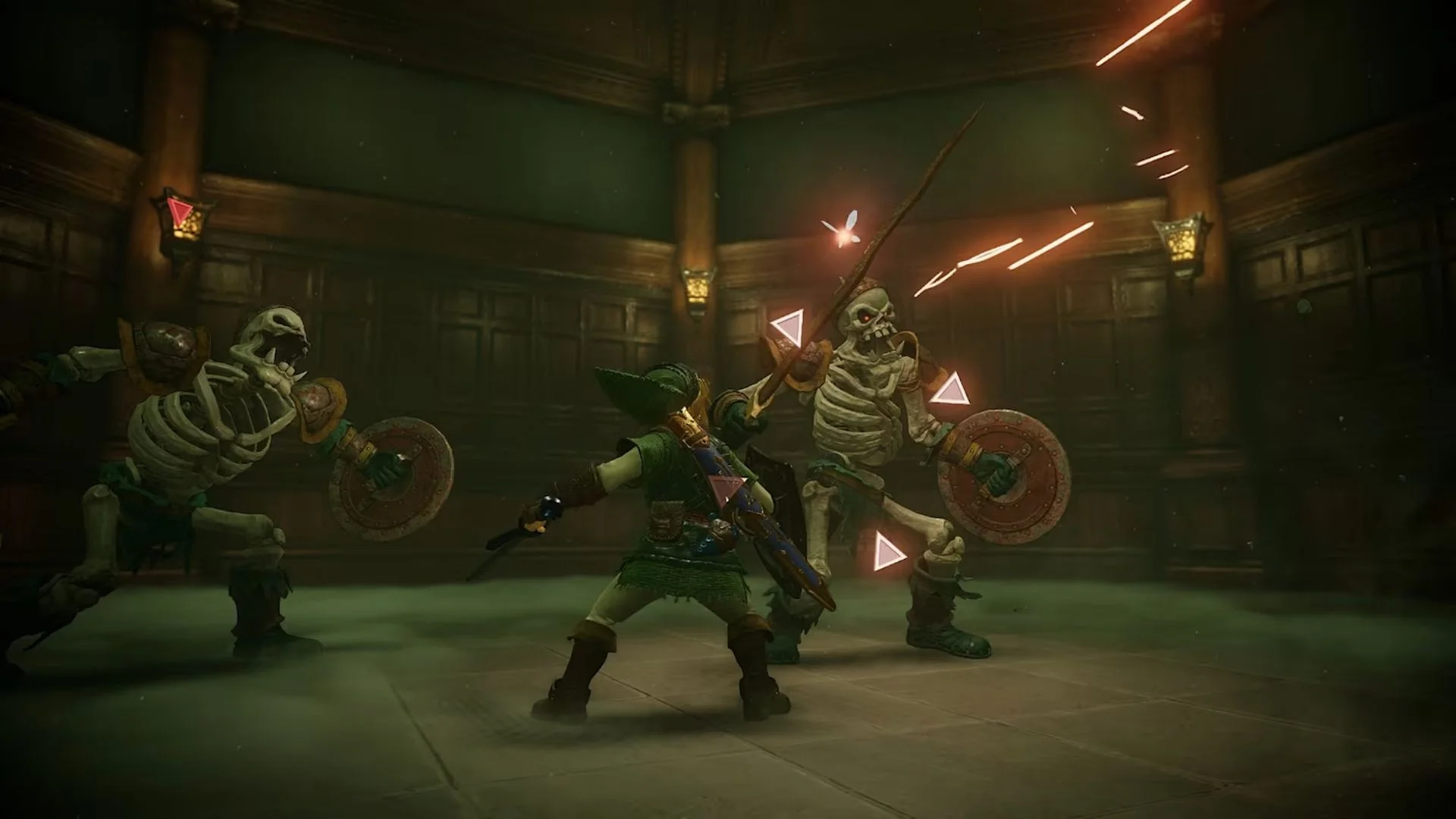
Remakes usually earn attention by changing things. Nintendo's Ocarina of Time remake takes the opposite approach, and that restraint is the reason it works. It's a strange moment for a game this old to sit at the top of critics' ratings, and yet it has done so not once but twice, which tells you how well the team judged what needed to stay.
Why the Original Still Gets Under My Skin
I'm not coming to this as a neutral observer. I was the kid hovering around the kiosks at retail stores, replaying the same stretch of the original until someone pulled me away. I called shops repeatedly to ask whether copies were in stock, because pre-ordering didn't guarantee anything if enough people reserved ahead of you. When I finally got properly into Hyrule, the game stayed with me for years.
So when I say the remake still grabs me, I'm measuring it against a lot of memory. The good news is that it holds up. The original was a trailblazer, and its fingerprints are everywhere. Z-targeting still shapes how 3D Zelda games feel to play. Link's side-hops, backflips, and jump attacks remain part of the vocabulary, and horse-riding still feels right. The remake keeps all of that intact, but what lifts it higher is how much of the original's charm survives the upgrade.
Small Moments Carry the Weight
Some of the best moments are the ones that could have been dropped without anyone noticing. Leaping over the Lon Lon Ranch wall with Epona and heading out into Hyrule with no one else around you still lands. Watching Zelda escape on that stormy night, then meeting Ganondorf face to face for the first time, carries real tension. Hyrule Castle Town feels more alive than ever, from the central square down to the back alleys. I didn't expect those feelings to return after so long, yet they never really left. Even without the novelty of discovering everything for the first time, that childlike sense of wonder holds up.
The Lost Woods are a better example of what modern tools can do. Following the tune toward Saria, running into Mido, and pulling out the ocarina to get past him is a simple scene on paper. Today's motion capture, facial animation, and cinematography could easily turn it into spectacle. Instead, the technology gives the moment more gravity while keeping its essence intact. It doesn't feel dressed up. It feels like the same scene, just seen more clearly.
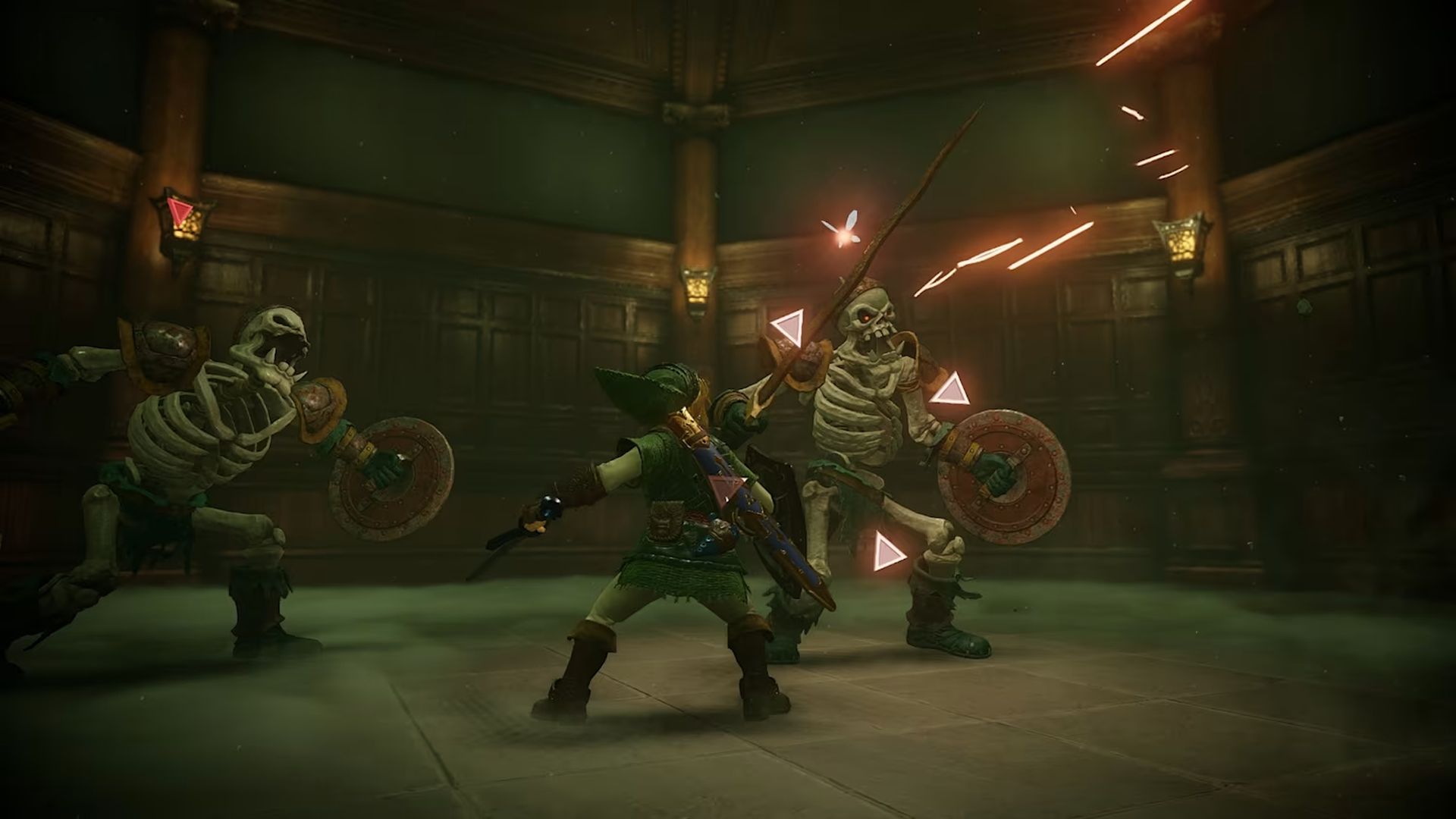
Queen Gohma's introduction in the Deku Tree is another case where the remake respects the original's instincts. The original staged it as an unsettling reveal, with the player looking up to catch the glow of her eye before the cutscene starts. The remake keeps that creepy setup and adds detail as she drops down. You notice the furrowed lid, the glances at her claws, and then the focused stare back at these pesky intruders. I never expected Gohma to have a personality, and yet here we are.
Restraint Is the Hard Part
Remakes tend to fall into two camps. Some stay close to the source, while others expand on it. Recent examples like the Resident Evil remakes and Assassin's Creed Black Flag Resynced took the expansion route. Ocarina of Time's remake clearly chose fidelity. The plot hasn't changed, at least not in anything I've found so far. Bosses have new attacks, but they still follow the original's logic. Nintendo even kept the loading screens and transitions between Hyrule Field and dedicated locations, which tells you how seriously the team took preservation.
That choice creates its own challenge. When a formula works this well, the hard question isn't what to bolt on. It's what to add without disturbing what made the thing work in the first place, flaws included. The dedicated jump button feels great, and it's hilarious to watch some players who haven't adjusted to it tumble straight into a rolling boulder. Swapping items without opening the menu is a real quality-of-life win, and the Tapestry of Time makes tracking your quest easier. But the core of Ocarina of Time is still there, untouched. And it's still an absolute blast.
Newcomers who learned on Breath of the Wild and Tears of the Kingdom are probably meeting this design style for the first time, and they seem to be enjoying it. Longtime fans are going back through to see what changed while chasing the feeling of the original. It's an odd sensation, since nothing here is technically new, yet it still feels fresh. Nintendo pulled that off. I'd say it looks effortless, but producer Eiji Aonuma's visible nervousness about the reception makes more sense now. He likely knew that fans would replay this remake and judge whether every change felt deliberate. The goal wasn't to polish everything into something unrecognizable. It was to make every choice feel right.
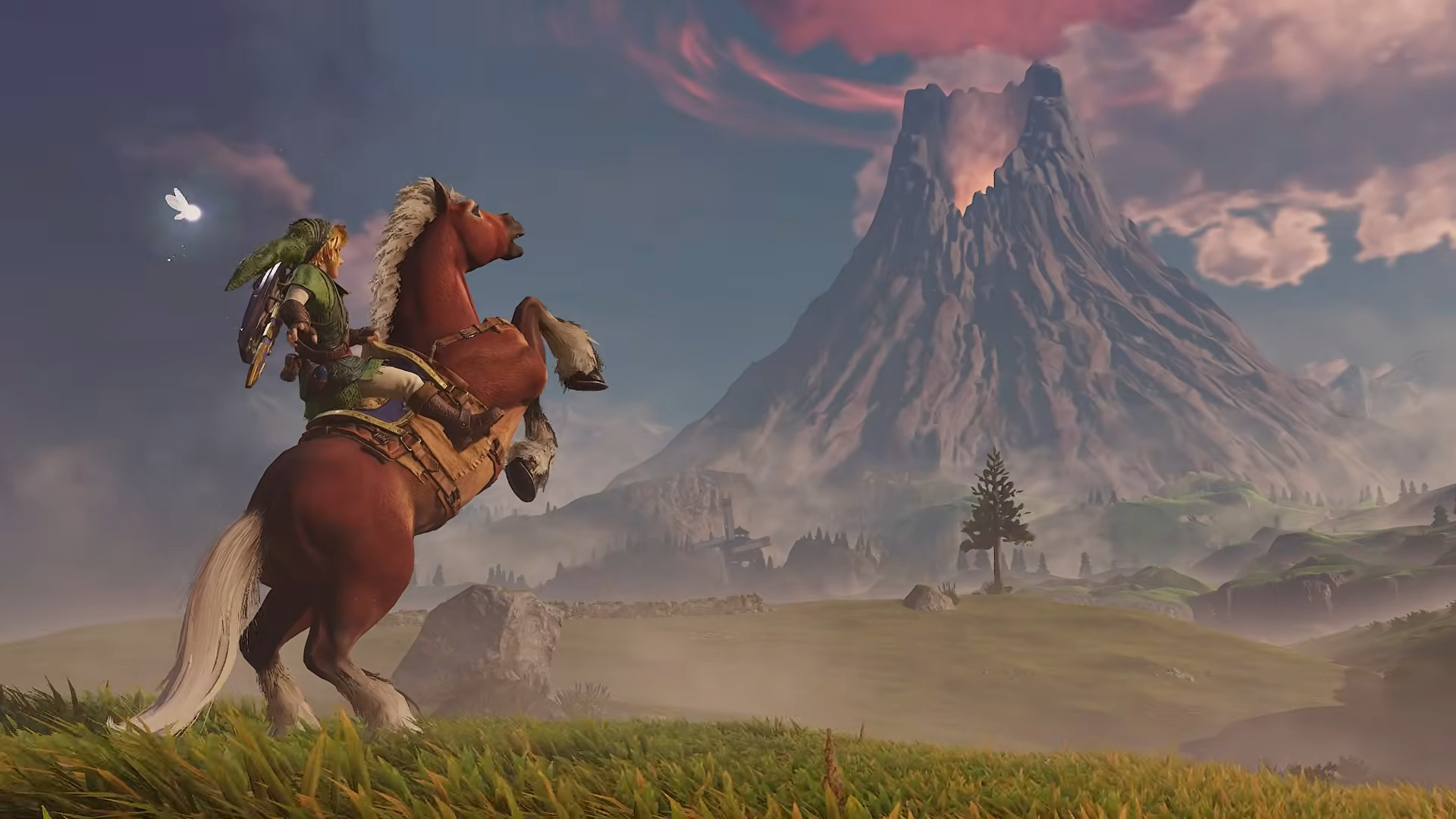
Time Keeps Moving
There's plenty more to praise. The visuals are striking, and the soundtrack still ranks among my all-time favorites, if not at the very top. The bosses hold up from every angle and feel more alive than before. Combat responds crisply without piling on unnecessary systems. The characters keep their place in the story, including the ones who are weird in the best way. And the world pulls you in naturally, packing in enough secrets and discoveries that it feels larger than it is. Playing it also recalls a slower era of games, when you could vanish into a legendary tale for hours and feel like only minutes had passed.
Still, one line from the game keeps coming back to me, and it hits harder now than it did when I was a kid:
"The flow of time is always cruel. Its speed seems different for each person, but no one can change it… A thing that does not change with time is a memory of younger days."
Aonuma and his team may not have had that line in mind during development, but the remake lives up to it about as well as any remake could. It stands beside the original the way Adult Link stands beside Young Link. It honors the memories of people who first played it decades ago, and it shows why the experience still matters to people encountering it for the first time. The franchise keeps branching in new directions, and each mainline entry gets bigger and bolder. Still, the river keeps flowing, and this remake suggests some experiences don't wash away with it.



Discussion
Sign in to join the discussion.