Charting the Unknown offers focused epilogues for Kliff, Oongka and Damiane, though familiar puzzles and underwhelming bosses interrupt the stories.
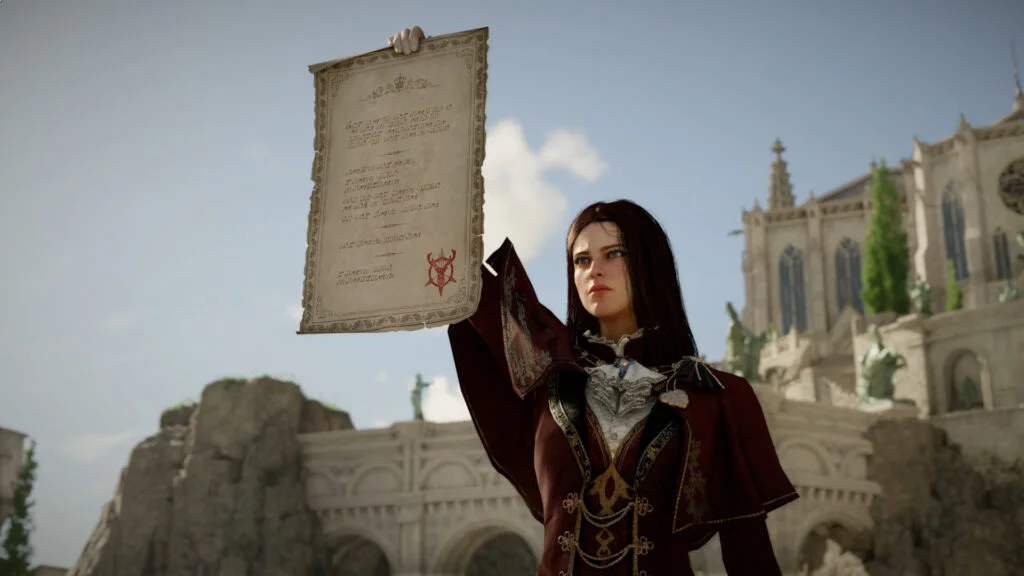
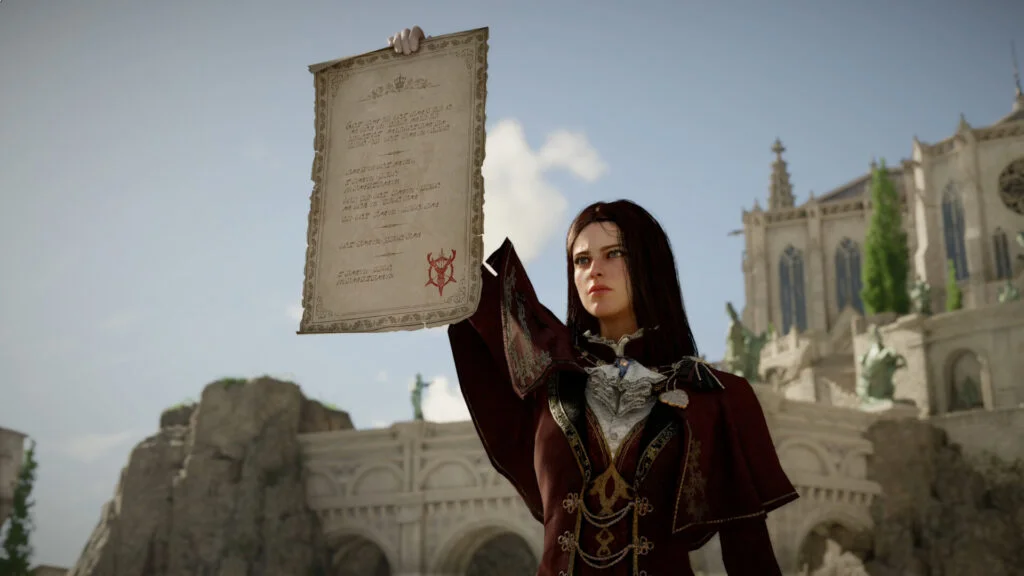
Charting the Unknown makes a persuasive case for what Crimson Desert’s story can do after its central conflict ends: give each of its three heroes a future shaped by who they are. Kliff, Oongka and Damiane each get a distinct post-game chapter, and the shift in focus gives the expansion a clearer narrative identity than the base game sometimes managed.
The result isn’t flawless. The new stories are more compelling than many of the opponents and puzzles placed along their paths, and those interruptions can slow the momentum at exactly the wrong time. Still, the chapters offer meaningful closure and point the trio toward lives beyond the crisis that brought them together.
Three heroes, three directions
The expansion’s strongest structural choice is keeping each featured character at the center of their own story. In the base game, Kliff often drew the most narrative attention, leaving less room for Damiane and Oongka’s personal arcs. These new chapters correct that imbalance. Each protagonist gets a reason to act, a problem suited to their character and a chance to change how they approach what comes next.
That focus also makes the stories feel like more than a sequence of post-game errands. The missions move characters from one situation to another with enough context to give their journeys purpose, while their destinations reveal new pressures facing Pywel after peace returns. The world may be quieter than it was during the fight against Caliburn, but it hasn’t stopped changing.
A weekend with an expansion of this scale can only reveal part of what it contains, especially in a world as large as Pywel. Even within that limited window, though, the three character arcs stand out as a coherent set: Kliff considers the work of opening a path for others, Oongka develops his technical curiosity, and Damiane takes on a more active role in shaping Demeniss.
Kliff heads beyond familiar ground
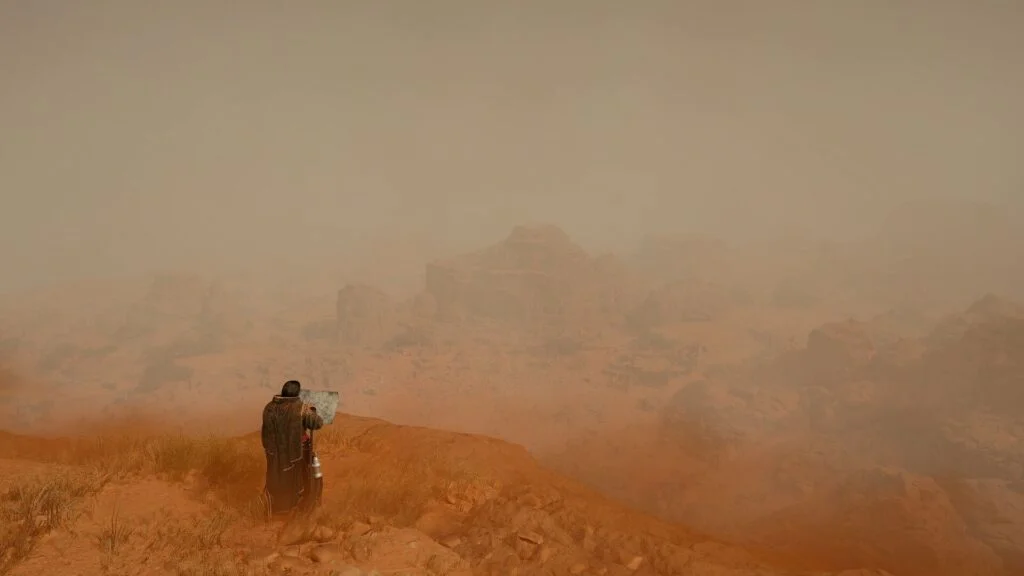
Kliff’s chapter, Beyond the Margins, turns the expansion’s title into a character question. After helping bring peace to Pywel, what does a Greymane do when there’s no immediate, world-threatening enemy to defeat? The answer begins with Sebastian, an enthusiastic cartographer, and an investigation into an unusual sandstorm in the Crimson Desert.
The journey puts Kliff in unfamiliar territory without making him feel out of character. His willingness to help fits his sense of duty, while the harsh desert conditions give that impulse a different weight. The group faces the possibility of losing its way and encountering a new danger, making the landscape part of the story’s central tension rather than just a backdrop.
Other interested parties join the expedition, and the threat behind the storm takes shape through its effects on people and places. The story doesn’t rely only on accounts of an unseen faction’s wrongdoing; Kliff and his companions experience the consequences as they travel. That approach gives the threat a tangible presence while protecting the details that make the revelations land.
More quietly, the chapter asks Kliff to think about what it means to travel into unknown territory and prepare the way for those who follow. He has already accomplished what he set out to do in the first palace. Now he has to consider what leadership looks like when the task is less about winning a decisive battle and more about helping others move forward.
Oongka turns from strength to invention
Oongka is easy to read as the Greymanes’ muscle. His blunt manner and combat ability can obscure the tactical intelligence that’s already part of his character. Charting the Unknown brings that less visible side forward, giving him a personal reason to prepare for whatever comes after the group’s earlier battles.
His motivation isn’t as immediately convincing as Kliff’s or Damiane’s, but the arc makes good use of it. Oongka has to rely on thought and investigation rather than force, creating room for callbacks to the base game and showing how he might handle a challenge that can’t be solved with his weapons.
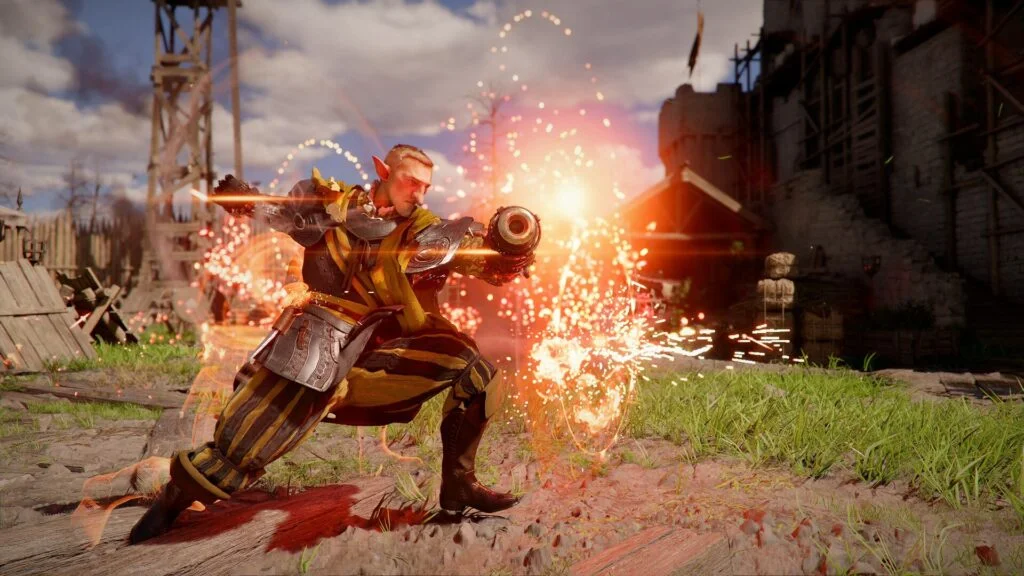
The story also gives context to the technology he incorporates into his fighting style. His interest in engineering becomes more than a combat detail: Oongka is curious about how things work and willing to gather the knowledge needed to make his own inventions. That shift adds an interesting dimension to a character previously defined more by his experience as a warrior.
The chapter frames this development as a test. Can Oongka succeed as a scholar and inventor as well as a fighter? His response to the Black Bear’s attack on the Greymanes helps explain why he would consider that path, even if it’s one he might not have chosen before. The story’s best contribution is the new perspective it gives his familiar abilities.
Damiane claims a place in Demeniss
Damiane’s chapter makes especially effective use of Demeniss, a region whose court politics felt underdeveloped in the base game. Caliburn’s schemes have ended, but their effects remain. The nobility must decide what kind of future can protect the region from instability and corruption, and Damiane finds herself in a position to influence that decision.
The setup grows naturally from her connection to the region and her established motivations. A close acquaintance disappears under mysterious circumstances, prompting Damiane to investigate a potential new threat. From there, the story draws her into a web of returning characters, new figures and political interests. It gives the investigation personal stakes while widening its focus to Demeniss’s future.
Damiane’s growth comes through her changing relationship with power. The politics that once worked against her become the means by which she can help reshape the region. Kliff looks outward, toward the people who will follow him into unknown territory; Oongka looks toward the tools and knowledge that might make their future safer. Damiane, meanwhile, learns to work through the institutions and competing interests surrounding her.
Her allies matter, too. The Greymanes now feel more firmly united around her, making the group’s support easier to believe than it sometimes was in the base game. Damiane’s move from exile toward social reform gives her chapter a satisfying destination and makes it the strongest of the three.
When the action slows the story
The expansion’s narrative gains are less apparent in its antagonists. Damiane faces a bandit leader with striking fire-based attacks, but the encounter lacks much bite when the player’s character is already powerful after extensive exploration. Kliff’s final boss also feels familiar, despite receiving new attacks. The characters’ journeys carry more weight than the fights meant to conclude them.
Puzzles create a separate pacing problem. They’re often recognizable from the base game, and some feel less carefully designed than the earlier examples. Their bigger weakness is where they appear. At moments when a conversation or revelation has built anticipation, the story can stop to make the player clear another obstacle.
Oongka’s chapter offers a particularly awkward instance: a puzzle gates entry to a room where a new companion is waiting, even though the two characters were shown sharing that same space in the preceding scene. The sequence makes the puzzle feel like a detour inserted between story beats rather than a challenge that belongs to the scene.
That friction doesn’t erase the writing’s strengths, but it does make the chapters less fluid than they could be. The expansion is most engaging when it lets its protagonists confront questions about identity, responsibility and the future. Repeated interruptions give the quieter moments less room to build.
A worthwhile next step for the Greymanes
Charting the Unknown gives Crimson Desert’s central trio more balanced, character-led follow-ups. Its stories let the heroes move beyond the conflict that defined the base game, and each finds a direction that fits: Kliff takes on the unknown, Oongka pursues invention, and Damiane works to secure a better future for Demeniss.
The boss fights and puzzle placement keep the experience from matching its strongest writing, but the expansion still delivers the kind of closure a post-game continuation needs. Its clearest achievement is showing that peace doesn’t end these characters’ stories; it gives them space to choose what they’ll do next.


Discussion
Sign in to join the discussion.