Starting fresh in 66 Days Mode turns Phantom Blade Zero’s limited lives, scarce resources and optional detours into a tense test of skill and game knowledge.
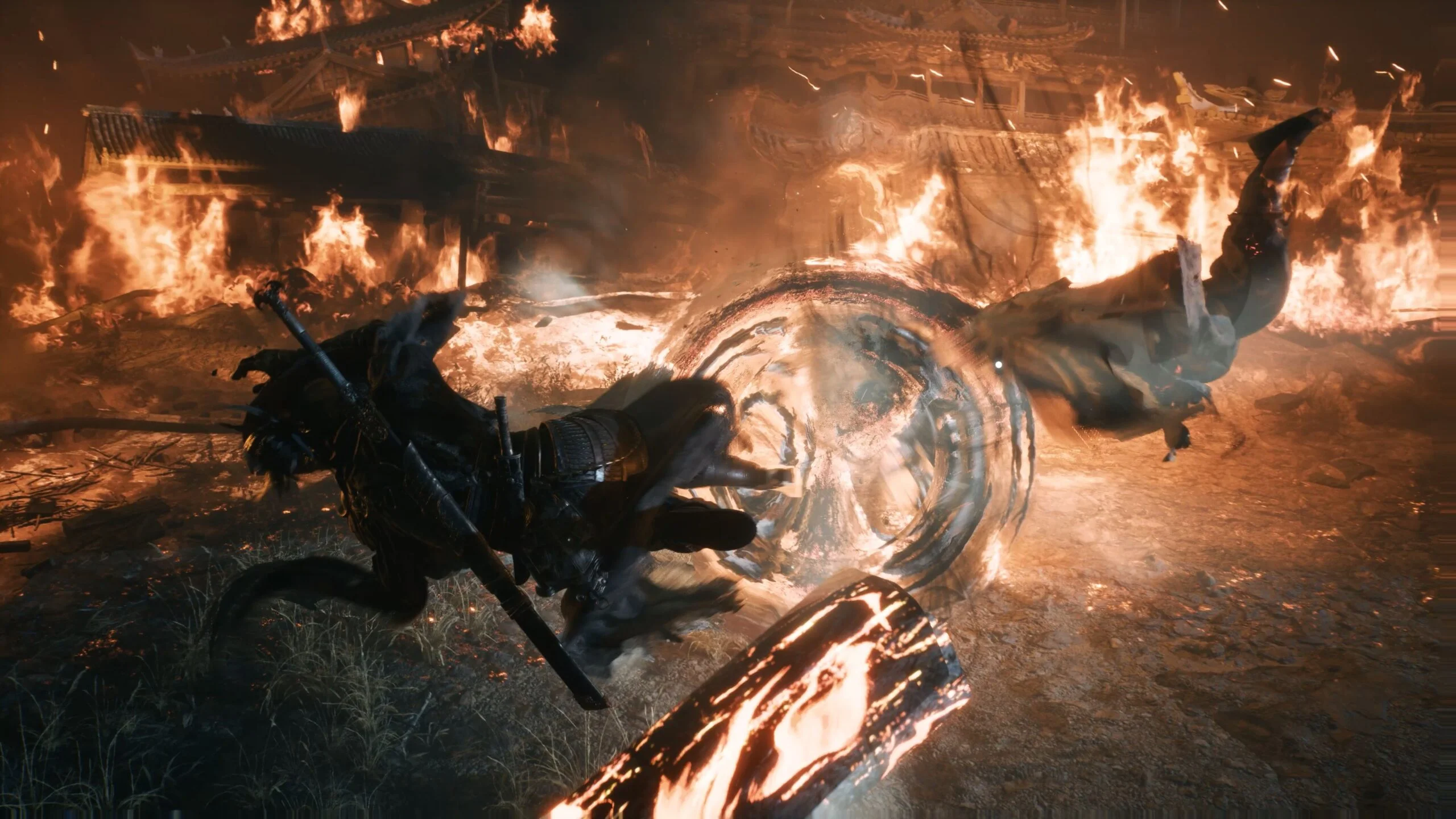
Phantom Blade Zero’s 66 Days Mode changes the value of nearly every decision. An optional detour can bring useful gear, but it also puts Soul at risk; a familiar boss can still end a run if its patterns catch you out. My read is that the mode’s strongest version starts with a fresh file, where survival depends on what you’ve learned rather than what you carried over.
A limited number of chances
66 Days Mode gives Soul 66 lives. Reach the limit and the save file is deleted, ending the run. The setup recalls permadeath modes in games such as XCOM and DOOM, as well as the self-imposed no-death challenges common in Souls-like games. But its place inside Phantom Blade Zero gives the restriction a narrative edge: Soul is fleeing the Order while facing a finite supply of chances.
The mode unlocks after a playthrough on Pathbreaker or Hellwalker. That requirement makes New Game Plus seem like the natural starting point. It carries over weapons, accessories, medicines and other progress, while allowing primary weapons and Phantom Edges to reach higher upgrade levels. The catch is that equipment must be found again, and the gear from late in a previous run may not be available when you want it.
More than that, a powered-up Soul can blunt the tension that makes 66 Days Mode compelling. High weapon levels, strong accessories and a deep stock of healing can turn unfamiliar attacks into manageable mistakes. A grab from Hua, especially when hidden among white flower projectiles, should feel dangerous. With enough health to absorb it twice, the threat loses much of its force.
New Game Plus still offers a taste of the mode, but a new playthrough makes its systems work together. You begin without upgraded stats, unlocked talents or a collection of endgame equipment to lean on. Starting on a difficulty below Hellwalker adds another layer of uncertainty: the challenge comes from limited lives and limited preparation, even before the toughest enemy patterns enter the equation.
Detours become decisions
In an ordinary run, exploring optional areas often feels like a straightforward bargain. In 66 Days Mode, every encounter adds risk to the search for supplies and upgrades. Looking for ingredients for Yu’er, investigating the Crimson Forest bandit camp for two warriors, or clearing the mist in the Village of Lu to face Dusk the Puppeteer can all help Soul. They can also expose him to danger he could have avoided by pressing ahead.
That pressure gives the story’s countdown a more immediate meaning. Soul’s remaining time becomes a resource the player can feel, even though the mode doesn’t remove lives as the plot advances. The days don’t tick away automatically in 66 Days Mode, so exploration is still a choice rather than a mandatory race against a narrative timer. But with only 66 deaths available, choosing where to take a fight matters more.
The Long Pillars are a good example of how knowledge and risk meet. Mo Yuan’s training may have prepared Soul, but Donnie Yen’s presence still means a mistake can strip away a large portion of his health. Optional fights can yield rewards, yet the potential cost is harder to ignore when each death brings the end closer.
Resources also shape the route. Phantom Blade Zero’s finite supplies mean upgrades and unlocks can’t be treated as limitless. The lack of respawning enemies reinforces that economy: backtracking won’t create fresh threats, but the resources available across the world are restricted. Players have to make their finds count and consider which encounters are worth the cost.
Preparation matters as much as reflexes
66 Days Mode rewards the skills players can practice, such as parrying, dodging and building effective combos. It also tests something less immediate: whether they remember where to find useful items, which enemies to handle first and when to leave a fight for later. That’s where repeated knowledge of the game becomes a survival tool.
Ranged enemies with explosive projectiles can feel chaotic on a first encounter. On a later run, knowing their positions and the best way to take them out makes the threat easier to manage. Red presents a more specific lesson: defeating her before the Chief Disciple of the Seven-Stars Formation prevents a tougher sequence later. The challenge then becomes finding a safe way to beat her without retreating, particularly for players who haven’t learned the fight in advance.
That combination of execution and planning is what makes the mode feel like a pursuit of mastery. Practicing timing can improve reactions, but it can’t replace a sound decision about where to go, what to spend or which fight to avoid. The most capable run is built through both combat skill and a clearer understanding of the game’s routes.
Why boss checkpoints fit
Boss checkpoints make more sense when each death carries a lasting cost. If Soul has already beaten a boss’s opening phase, forcing him to repeat it after every failure can add repetition without adding much to the test. The checkpoint preserves the challenge while letting the player focus on the part of the encounter that caused the problem.
Mu Xiaokui’s fight shows why that matters. It starts simply, escalates into a full brawl and then adds a third phase, with Iron Fiend and Jade Dancer joining the battle as elite bodyguards. By that point, healing may be nearly gone. A checkpoint that skips the first two phases makes attempts at the final stretch more reasonable, especially when another death could end a run.
The checkpoint system doesn’t make the mode forgiving in a broad sense. A single save file and no manual saves remove the option to reload after a poor weapon upgrade or freely change a build to suit a boss. Players have to commit to their choices and work out how to win with the tools they have. That constraint gives preparation more weight than improvisation.
A challenge with a clear purpose
Despite its severe penalty, 66 Days Mode can feel demanding without feeling arbitrary. Boss checkpoints reduce needless repetition, enemies don’t respawn, and the mode doesn’t let story events silently consume Soul’s remaining lives. The challenge instead comes from the consequences of combat decisions and the player’s own willingness to take risks.
That makes the mode a fitting next step after finishing Phantom Blade Zero. A first playthrough teaches its combat and reveals its routes; 66 Days Mode asks players to use that knowledge under pressure. The takeaway is simple: start fresh, think carefully about optional fights, and treat every upgrade and encounter as part of the same survival plan. After that, a run with the Wooden Sanguine sword offers another test for anyone still chasing mastery.

Discussion
Sign in to join the discussion.